Showing posts with label books. Show all posts

Monday, 2 January 2023

My top 5 books from 2022

There are many ways to assess a year gone by, e.g. money, bonus, new cuountries visited, etc. One particularly useful way is to remember the books we read in the past year. To be sure, I did not complete meet my Goodreads (yup, I enjoy the app!) 2022 Reading Challenge (24 read vs a target of 30). 
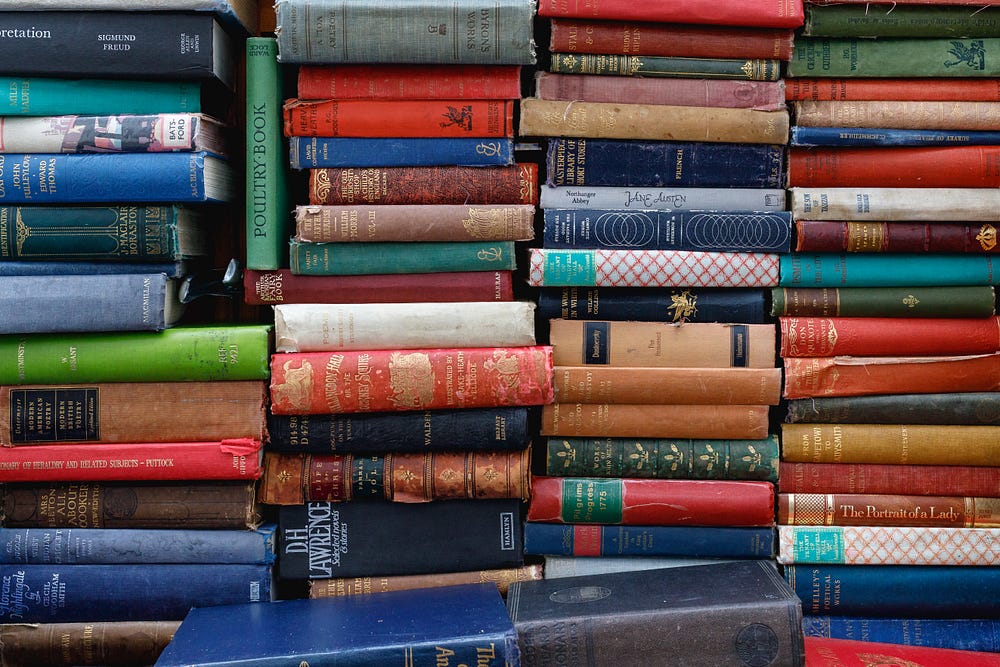
Credit: Ed Robertson (Unsplash)

Nonetheless, 24 is a large enough number for me to pick out my top five books of 2022 and here they are (in no particular order):

1. Empires in the Sun: The Struggle for the Mastery of Africa by Lawrence James.

A concise, yet insightful, synopsis of Africa’s recent colonial history. The author extrapolates broad brush strokes from the many individual happenings around the continent — very useful for the reader. 

2. God’s Own Land: A Novel of Pakistan by Shaukat Siddiqui.

A classic Urdu novel set in 1950s Pakistan. God’s Own Land is the sort of novel which deserves to be in school curriculums. It pierces the universal human condition while at the same time provides deep insights into Pakistani society (many of which remain valid seven decades later). 

3. Night Train to Lisbon by Pascal Mercier, Barbara Harshav (Translator). 

A wonderful novel about searching and finding. The plot unravels slowly and with elegance as the characters are fleshed out. A good read when in a pensive, soul searching frame of mind. 

4. How to Be an Existentialist: or How to Get Real, Get a Grip and Stop Making Excuses by Gary Cox

It’s hard to go wrong with Existentialism as a philosopy. It is, after all, a philosophy of action even though it may be cerebral in its literary form. A great ‘how to’ compendium with a dash of humor thrown in .. wordy at times but comprehensible. 

5. Red Metal by Mark Greaney

Technically a war novel, but Red Metal becomes a little more given the Ukraine war playing out as I write this. The book is a fictional account of a war between Russia and NATO. Yes, it’s a novel, i.e. fiction, but there is a strong element of realism in the writings. A good, exciting novel for readers of the war genre. 

What books are on your reading list for 2023? Please share your recommendations in the comments below.

Tuesday, 27 December 2022

How to Be an Existentialist or How to Get Real, Get a Grip and Stop Making Excuses - a book review


Philosophy is not easy to dumb down - or at least a sophisticated and complex philosophical world view like existentialism. Nonetheless, in this brief work, Cox has done an admirable job in simplifying existentialism. 

To be sure, there are paragraphs which require rereading to be understood but, by and large, Cox succeeds in explaining authenticity, bad faith, freedom and other critical aspects of existentialism succinctly. 

Cox's work is a nice recap for readers familiar with the existentialism of Sartre (and others). For newbies, it's a good place to start though some knowledge of the existentialist world view will help.

Sunday, 9 August 2020

The Swing Trader's Bible by Matthew McCall and Mark Whistler: a book review


A good introduction to swing trading.


The authors do a good job identifying and explaining the multiple tools and instruments most commonly used for swing trading. Be warned, however, the book does not go into enough depth to be a stand alone master class on the subject. Traders are well advised to continue their education into the subject before taking the plunge into trading with real dollars and cents.


The book reads easily. The authors have simplified complex ideas well. The title is a good place to start for any aspiring swing trader - as long as the learning doesn't stop with this book.

______________

Imran is a Singapore based Tour Guide with a special interest in arts and history. Imran has lived and worked in several countries during his past career as an international banker. He enjoys traveling, especially by train, as a way to feed his curiosity about the world and nurture his interest in photography. He is available on Instagram (@imranahmedsg); twitter (@grandmoofti) and can be contacted at imran.ahmed.sg@gmail.com.

Monday, 8 June 2020

The Good Shepherd by C.S. Forester: a book review


“For in war the character and personality of the leader is decisive in events much more than questions of material.”

The Good Shepherd is a naval military classic - perhaps slightly dated for contemporary readers as it revolves around a group of naval vessels protecting numerous merchant ships in convoy transporting cargo from the US to its World War Two allies in Europe. Ships from several allied navies under the command of a young US naval officer, George Krause, are assigned to guard a convoy from marauding German submarine predators.


Forester’s novel is about character and leadership. The fast paced action and naval duelling are simply the containers through which the author reveals his insights.

Forester does an amazing job getting the reader inside Krause’s head. We know Krause loves black coffee and can guzzle an entire jug – hot or cold - without flinching. We also know he is a religious man whose decision making is influenced by his notion of Christian ethics.

Lives hang in the balance as the captain makes life and death decisions instantaneously, sometimes literally as whether to pick up enemy survivors drifting in the open sea. In these split second decisions, Krause must reach urgent compromises between husbanding convoy resources, cultural / political factors given the presence of ships from navies like Poland, etc., attack versus defence, maintaining moral leadership over his crew and inspiring the other crews.

Sometimes his decisions are explained while at other times these choices seem almost random flips of a coin. (Luck as a crucial element in leadership?)

More often than not, war literature is associated with armies and land based warfare. The Good Shepherd by C.S. Forester is a pleasant change. It brings to life the hopes, fears and desperations of a generation of seafarers who fought on earth’s vast oceans. The work is not only an adventure novel but also wanders into the realms of psychology. Though first published in 1955, Forester’s work has not lost any of its allure during the ensuing six decades.
__________________
Imran is a Singapore based Tour Guide with a special interest in arts and history. Imran has lived and worked in several countries during his past career as an international banker. He enjoys traveling, especially by train, as a way to feed his curiosity about the world and nurture his interest in photography. He is available on Instagram (@imranahmedsg); twitter (@grandmoofti) and can be contacted at imran.ahmed.sg@gmail.com.


Monday, 24 September 2018

Secrets of State by Matthew Palmer: a book review


Secrets of State, a novel written by former US diplomat Matthew Palmer, is a sophisticated work of fiction. In his book Palmer weaves together a believable plot involving an US and Indian ‘deep state’ conspiracy to militarily destroy Pakistan. The story involves some classy character development, beginning with the main protagonist Sam Trainor.


The plot has ultra-nationalist patriots in the US and Indian collaborate to launch a (false flag?) nuclear attack on an Indian city in order to provoke an Indian military attack aimed at destroying Pakistan (once and for all). For the Americans, the motive is to ‘protect’ the world by preventing Pakistani nukes from following into the wrong hands, i.e. Islamic extremist terrorists.

Through chance, coincidence or synchronicity a retired US South Asia specialist, Sam Trainor, gets a whiff of the plot and starts investigating through his network of Washington contacts. Pretty soon Trainor finds himself in hot waters and realizes he is onto something big.  

Meanwhile, his clandestine love interest – an Indian diplomat at her country’s US mission – and his daughter – a do-gooder, socially conscious, young half-Indian woman doing development work in the slums of Mumbai – both find themselves sucked into the terrorist plot.

Despite what appears to be a far-fetched series of events, Palmer does a good job piecing the story together. He even adds some historical ‘make believe’ stories from time to time to give the novel greater believability. It works.

Events in Secrets of State move quickly. The reader is kept in suspense and will hardly notice the length (437 pages) of the novel. 

To be sure, the author cashed in on post 9/11 conventional wisdom which conveniently placed every international terrorist incident at Pakistan’s doorstep.[i] Nonetheless, Secrets of State is more nuanced than many post 9/11 ‘terrorist’ thrillers. Palmer’s fiction is a good addition to the genre. Anyone who enjoys a good geo-political thriller will find Secrets of State a good read.


[i] In the aftermath of 9/11, if an American in Washington DC caught the flu, it must have been a conspiracy involving biological weapons hatched in Pakistan’s governed tribal areas! Likewise, if a firecracker exploded unannounced on the streets of London it was an Islamic extremist attack planned and plotted by Pakistanis!

__________________
Imran is a Singapore based Tour Guide with a special interest in arts and history. Imran has lived and worked in several countries during his past career as an international banker. He enjoys traveling, especially by train, as a way to feed his curiosity about the world and nurture his interest in photography. He is available on twitter (@grandmoofti); Instagram (@imranahmedsg) and can be contacted at imran.ahmed.sg@gmail.com

Sunday, 24 June 2018

Confrontation by Mohamed Latiff Mohamed: a book review


Having lived in Singapore for almost twenty years and as a licensed Singapore Tour Guide I know Singapore well. Academically and ‘in theory’ at least.

However, since I did not grow up in Singapore I don’t have the shared experiences of many Singaporeans of my age. I did not listen to stories from my parents about the ‘Konfrontasi’ period between Malaya – of which Singapore was then a part – and Sukarno’s Indonesia. I also did not grow up in a Singapore dotted with kampongs and wooden shacks. (HDB apartments became the order of the day by the late 1970s.)


For such experiences I turn to literature. There may not be a lot of it around as most Singaporeans were busy making ends meet – not much free time and hardly any disposable income. Hence, Mohamed Latiff’s book Confrontation – originally written in Malay - helps to fill some ‘memory’ gaps for me.

The story revolves around a kampong boy and his life in a mixed Chinese – Malay kampong in the 1960s. Political consciousness, the communist movement and Malay Nationalism are some of the undercurrents which flow through the book.

Nonetheless, the book has a human face to it. There are multiple (believable) characters all of whom go through the joys and sorrows of life like the rest of us. (No superheroes in this novel.) The characters make the novel worthwhile even for those not interested in Singapore’s history and social conditions during the 1960s ‘Merdeka Period.’ For those wishing to understand Singapore’s social milieu as seen from a Malay perspective Latiff’s novel Confrontation is a must.
__________________
Imran is a Singapore based Tour Guide with a special interest in arts and history. Imran has lived and worked in several countries during his past career as an international banker. He enjoys traveling, especially by train, as a way to feed his curiosity about the world and nurture his interest in photography. He is available on twitter (@grandmoofti); Instagram (@imranahmedsg) and can be contacted at imran.ahmed.sg@gmail.com.

Saturday, 17 March 2018

Gravitas by Caroline Goyder: a book review


Self-improvement books are a nice way to make one feel good. They energize one while reading. Indeed, we make all sorts of mental promises to implement the many wonderful suggestions contained in the book.


That is the case with virtually all self-improvement books. The difference between a nice and a great self-improvement book is whether one carries through with all those promises and suggestions.

Are the recommendations easily remembered in a catchy way? How practical are they for one’s life? Surely, there is an element of personal motivation involved though much of that hurdle was already crossed when a reader picks up a specific title.

Gravitas by Caroline Goyder had more potential than the author realizes. The entire book is readable. No doubt about that. It was well organized. It revealed insights; it used catchy acronyms.

Still, it just didn’t quite get there. It’s difficult to say why. Perhaps it was an (ostensible) lack of depth which turned me off. It just lacked that ‘gravitas’ associated with a terrific read. Nonetheless, if you have a few hours - say on an intercontinental airplane journey - Gravitas is not a bad way to fumble in and out of sleep.


Imran is an adventurer, blogger, consultant, guide, photographer, speaker, traveler and a banker in his previous life. He is available on twitter (@grandmoofti); Instagram (@imranahmedsg) and can be contacted at imran.ahmed.sg@gmail.com.

Monday, 14 August 2017

Fault Lines: Stories of 1971 [Pakistan - India war]: a book review


For those of us are old enough to know there once existed an East Pakistan but young enough to know little other than the nightly air raid blackouts there is a paucity of literature about the 1971 war, at least in the 'remaining' wing of Pakistan aka West Pakistan. 


Fault Lines is a collection of short stories from several authors: Bangladeshi, Indian and Pakistani. The stories help provide some color to the war experience from several perspectives. Most importantly, these are stories about the 'human' experience of what must have been a brutalizing period in South Asian history. 


To be sure, the authors paint good guys and bad guys but mostly through the eyes of the characters themselves. I imagine for many Pakistanis some of the stories make painful reading - perhaps why this critically important event in the country's history is papered over as if it didn't exist? 


Undoubtedly, the 1971 war and the creation of Bangladesh are two subjects screaming out for more literary examination. It's been almost five decades since the war ended - suitable time for at least the most painful wartime wounds to have healed; and the birth of a new generation searching for meaning in the country's historical evolution. 


Fault Lines is a valiant effort by the editors to collect short stories about the 1971 war. History and literature are not the only beneficiaries. The book adds one piece to the puzzle for those trying to unravel the mysteries of the 1971 war.


Imran is an adventurer, blogger, consultant, guide, photographer, speaker, traveler and a banker in his previous life. He is available on twitter (@grandmoofti); instagram (@imranahmedsg) and can be contacted at imran.ahmed.sg@gmail.com.