Showing posts with label read. Show all posts

Monday, 2 January 2023

My top 5 books from 2022

There are many ways to assess a year gone by, e.g. money, bonus, new cuountries visited, etc. One particularly useful way is to remember the books we read in the past year. To be sure, I did not complete meet my Goodreads (yup, I enjoy the app!) 2022 Reading Challenge (24 read vs a target of 30). 
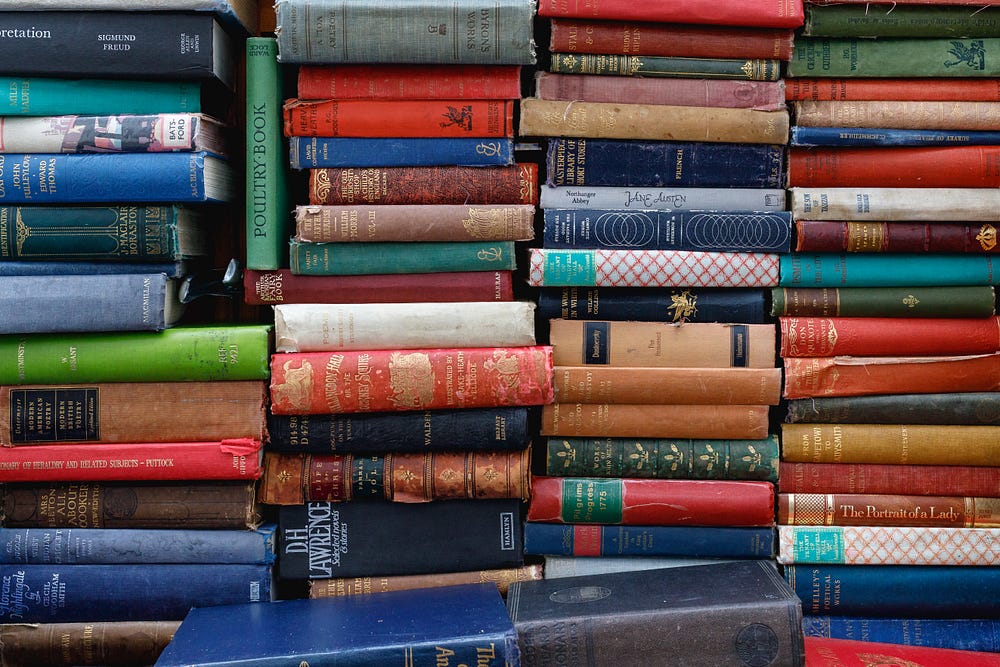
Credit: Ed Robertson (Unsplash)

Nonetheless, 24 is a large enough number for me to pick out my top five books of 2022 and here they are (in no particular order):

1. Empires in the Sun: The Struggle for the Mastery of Africa by Lawrence James.

A concise, yet insightful, synopsis of Africa’s recent colonial history. The author extrapolates broad brush strokes from the many individual happenings around the continent — very useful for the reader. 

2. God’s Own Land: A Novel of Pakistan by Shaukat Siddiqui.

A classic Urdu novel set in 1950s Pakistan. God’s Own Land is the sort of novel which deserves to be in school curriculums. It pierces the universal human condition while at the same time provides deep insights into Pakistani society (many of which remain valid seven decades later). 

3. Night Train to Lisbon by Pascal Mercier, Barbara Harshav (Translator). 

A wonderful novel about searching and finding. The plot unravels slowly and with elegance as the characters are fleshed out. A good read when in a pensive, soul searching frame of mind. 

4. How to Be an Existentialist: or How to Get Real, Get a Grip and Stop Making Excuses by Gary Cox

It’s hard to go wrong with Existentialism as a philosopy. It is, after all, a philosophy of action even though it may be cerebral in its literary form. A great ‘how to’ compendium with a dash of humor thrown in .. wordy at times but comprehensible. 

5. Red Metal by Mark Greaney

Technically a war novel, but Red Metal becomes a little more given the Ukraine war playing out as I write this. The book is a fictional account of a war between Russia and NATO. Yes, it’s a novel, i.e. fiction, but there is a strong element of realism in the writings. A good, exciting novel for readers of the war genre. 

What books are on your reading list for 2023? Please share your recommendations in the comments below.

Sunday, 9 August 2020

The Swing Trader's Bible by Matthew McCall and Mark Whistler: a book review


A good introduction to swing trading.


The authors do a good job identifying and explaining the multiple tools and instruments most commonly used for swing trading. Be warned, however, the book does not go into enough depth to be a stand alone master class on the subject. Traders are well advised to continue their education into the subject before taking the plunge into trading with real dollars and cents.


The book reads easily. The authors have simplified complex ideas well. The title is a good place to start for any aspiring swing trader - as long as the learning doesn't stop with this book.

______________

Imran is a Singapore based Tour Guide with a special interest in arts and history. Imran has lived and worked in several countries during his past career as an international banker. He enjoys traveling, especially by train, as a way to feed his curiosity about the world and nurture his interest in photography. He is available on Instagram (@imranahmedsg); twitter (@grandmoofti) and can be contacted at imran.ahmed.sg@gmail.com.

Monday, 8 June 2020

The Good Shepherd by C.S. Forester: a book review


“For in war the character and personality of the leader is decisive in events much more than questions of material.”

The Good Shepherd is a naval military classic - perhaps slightly dated for contemporary readers as it revolves around a group of naval vessels protecting numerous merchant ships in convoy transporting cargo from the US to its World War Two allies in Europe. Ships from several allied navies under the command of a young US naval officer, George Krause, are assigned to guard a convoy from marauding German submarine predators.


Forester’s novel is about character and leadership. The fast paced action and naval duelling are simply the containers through which the author reveals his insights.

Forester does an amazing job getting the reader inside Krause’s head. We know Krause loves black coffee and can guzzle an entire jug – hot or cold - without flinching. We also know he is a religious man whose decision making is influenced by his notion of Christian ethics.

Lives hang in the balance as the captain makes life and death decisions instantaneously, sometimes literally as whether to pick up enemy survivors drifting in the open sea. In these split second decisions, Krause must reach urgent compromises between husbanding convoy resources, cultural / political factors given the presence of ships from navies like Poland, etc., attack versus defence, maintaining moral leadership over his crew and inspiring the other crews.

Sometimes his decisions are explained while at other times these choices seem almost random flips of a coin. (Luck as a crucial element in leadership?)

More often than not, war literature is associated with armies and land based warfare. The Good Shepherd by C.S. Forester is a pleasant change. It brings to life the hopes, fears and desperations of a generation of seafarers who fought on earth’s vast oceans. The work is not only an adventure novel but also wanders into the realms of psychology. Though first published in 1955, Forester’s work has not lost any of its allure during the ensuing six decades.
__________________
Imran is a Singapore based Tour Guide with a special interest in arts and history. Imran has lived and worked in several countries during his past career as an international banker. He enjoys traveling, especially by train, as a way to feed his curiosity about the world and nurture his interest in photography. He is available on Instagram (@imranahmedsg); twitter (@grandmoofti) and can be contacted at imran.ahmed.sg@gmail.com.


Sunday, 12 April 2020

The Ladies Paradise by Emile Zola: a book review

French author Emile Zola (1840 – 1902) was above all a social observer. His works provide a window into the nineteenth century. The Ladies Paradise, first published in 1883, is a sociological study of the time disguised within an exceptional novel. 
The novel uses the lives of two principal characters – Mouret and Denise – to illustrate societal dislocations as a new order slowly destroys the old order. This includes the suffering of people unable to adjust and make way for the new and the hold outs hanging on to the past as if their entire being depended on it. 
Mouret is a new breed of businessman (entrepreneur?) radically transforming retail trade in Paris. He is powerful, focused and hard working. He is also used to getting what he wants out of life, including women. Few obstacles were strong enough to challenge the march of Mouret's vision in creating an universal department store selling all manner of things; that in an age of shops specializing in individual trades. For example,  one shop sold lace while another sold velvet and yet a third sold knick-knacks. None sold all three under one roof – that is until Mouret's store, The Ladies Paradise.
Denise is a poor, country girl who finds herself not only struggling to survive in the big city but also in the politics and chicanery of employees at Mouret's store. With a little help from Mouret, Denise survives a brutal initiation at the Ladies Paradise and starts to make her presence felt. (Mouret simply wants to add Denise to his list of conquests.) 
Life of course never moves in a straight line. Neither does a good novel. 
Over time, along with his obsession of growing his department store, Mouret's develops an unhealthy obsession with conquering Denise. Meanwhile, Denise has gathered all the wiles of any Parisian noblewoman and innocently uses Mouret's infatuation to influence the evolution of the Ladies Paradise. 
Zola is a master in symbolism and the novel contains notable use of the tool. The novel is written in rich, descriptive prose very different from the brief 'no extras included' copy writing in fashion today. While The Ladies Paradise will appeal to the analytical reader looking to obtain insights into the human psyche and society it is also a simple story of a young country girl out to survive in the glittering big city. 
__________________
Imran is a Singapore based Tour Guide with a special interest in arts and history. Imran has lived and worked in several countries during his past career as an international banker. He enjoys traveling, especially by train, as a way to feed his curiosity about the world and nurture his interest in photography. He is available on Instagram (@imranahmedsg); twitter (@grandmoofti) and can be contacted at imran.ahmed.sg@gmail.com.

Monday, 6 January 2020

The Gift of the Gab: How Eloquence Works by David Crystal – a book review


Anyone who presents regularly understands eloquence is not innate. It is a learned skill requiring much practice. Indeed, it can be compared to acting in that public speaking requires rehearsing and even choreography.


The Gift of the Gab: How Eloquence Works by David Crystal is a useful reminder of some of the things to get right for public speakers. While the book is comprised of many short chapters making it easier to read, it is also filled with complex technical advice about eloquence. In other words, Crystal uses his background as a linguist to good use during the book.

It’s not only about the language but also delivery. Delivery includes pauses, hand motions, posture, tones and a whole lot more. Crystal touches on all of them in his book.

Crystal also uses examples to highlight every section of the book. To be sure, the book is US centric in that the prime example of an ideal speech which recurs throughout is former president Obama’s ‘Yes We Can’ speech in Chicago, USA. Obama’s speech, along with Martin Luther King’s ‘I Have a Dream’ speech, are even added to the appendix for reference.

The Gift of the Gab is not the best place for a newbie to start learning about presentation skills – a mite technical for that. However, it will certainly help anyone improve who makes an effort to implement Crystal’s advice.
__________________
Imran is a Singapore based Tour Guide with a special interest in arts and history. Imran has lived and worked in several countries during his past career as an international banker. He enjoys traveling, especially by train, as a way to feed his curiosity about the world and nurture his interest in photography. He is available on Instagram (@imranahmedsg); twitter (@grandmoofti) and can be contacted at imran.ahmed.sg@gmail.com.

Wednesday, 28 November 2018

The Art of Doing Good: Where Passion Meets Action - a book review


For anyone wishing to do good - and who doesn't - this is a wonderful book! 

Let me clarify, this book is not a standard 'self-help' book. It is a practical manual for those who wish to start (or are already involved with) a non-profit organization. The book provides useful tips peppered with personal anecdotes from practitioners which promise to make the life of any social entrepreneur easier and, hopefully, more successful. 


Social entrepreneurship or starting / managing a voluntary welfare organization is complicated. There are no hard and fast rules. Much has to be learnt 'on the fly.' Nonetheless, the author's have done well to provide readers with some basic principles in starting, managing and growing such organizations. 

The Art of Doing Good is a specialized work, not for everyone. For those who wish to get into the field of social entrepreneurship this book is an excellent place to start the journey. 
______________

Imran is a former banker and has lived and worked in several countries during his international banking career. He enjoys traveling, especially by train, as a way to feed his curiosity about the world and nurture his interest in photography. He is a licensed freelance tour guide in Singapore. He is available on twitter (@grandmoofti); Instagram (@imranahmedsg) and can be contacted at imran.ahmed.sg@gmail.com

Thursday, 27 September 2018

The Peculiar Life of a Lonely Postman by Denis Theriault: a book review


It has been a long time since I have read an entire novel from start to end in one sitting. A few days ago I did exactly that with Theriault’s book, The Peculiar Life of a Lonely Postman.

That fact in itself makes several statements about the book.


Firstly, it’s an intriguing book that keeps the reader engrossed. Secondly, at 137 pages it’s not a long work. Above all, the author’s curious blend of language with a ‘realist fantasy’ story composed about a seemingly boring, everyday character makes Theriault’s novel difficult to put down.

The plot concerns an introverted postman – Bilodo - who becomes a voyeur of sorts by reading others personal letters. During this process he comes across regular correspondence between a man and a woman done entirely in haiku, a Japanese form of poetry. He becomes so immersed in this vicarious relationship that it takes over his life, much like alcohol takes over an alcoholic’s life.

The postman himself is a sad, forlorn character. The reader empathizes with him more and more as the story develops. Bilodo’s desire for ideal love; his social awkwardness and even the way he finds himself metamorphosizing into another character all make the reader feel for him.

The author’s language is poetic, simple yet descriptive. It evokes emotions of calmness and being in the moment. The words flow like a long poem, reminiscent of reading The Four Quartets by TS Elliot during my student days.

This is a book which can be read at various levels. It has a Kafkaesque feel to it. The book is reality and fantasy set in our contemporary wired society. The ‘unreal’ bits make a social statement. The novel will surely make it into university literature curriculums in the coming years.

The Peculiar Life of a Lonely Postman is a book which will resonate with a wide range of audiences. It has philosophical undertones and yet its greatest appeal lies in its simplicity. It is an elegant book deserving of much more than the few hours required to complete it.
__________________
Imran is a Singapore based Tour Guide with a special interest in arts and history. Imran has lived and worked in several countries during his past career as an international banker. He enjoys traveling, especially by train, as a way to feed his curiosity about the world and nurture his interest in photography. He is available on twitter (@grandmoofti); Instagram (@imranahmedsg) and can be contacted at imran.ahmed.sg@gmail.com

Saturday, 4 August 2018

State of Emergency by Jeremy Tiang: a book review


State of Emergency by Jeremy Tiang is that new breed of Singapore novel which treads gently into areas which have hitherto remained untouched, perhaps because of the country's so called Out of Bound Markers (Subjects and government policies which are too sensitive to be debated by the general public).


As the title suggests, this novel is mostly set during the years of the Malayan Emergency of 1948 – 1960. During those years an active Communist insurgency was playing out in the jungles of Malaya (today's Malaysia) though the troubles reached as far south as Singapore itself.

Through the characters, which include a British journalist, a communist rebel fighter and her family, Tiang takes us through the reality of a divided nation fighting its own government. The author does not hold back in describing the often brutal tactics used by the British colonial regime – the Malayan Emergency was fought against the colonial authorities – to control and finally subdue the armed insurrection.

Among the tools used were torture, concentration camps and other harsh tactics used by authorities around the world to crush similar ideologically motivated armed uprisings. While these methods are 'geography-neutral,' i.e. they may be used by any country against any uprising, the harsh impact on humans varies subject to place and time. Tiang's novel highlights the repercussions of such extreme and brutal tactics on Singaporeans and their families.

Although fiction, State of Emergency is generally factually true to historic events. It shines a light on a dark segment of Malayan / Singapore history. And none too soon. It is hoped the novel is the first of many more such works revisiting a difficult period of Singapore's history. Surely, there are more stories about the Emergency buried in the concsiousness of Singaporeans and Malaysians which deserve to be heard by the general public?


Imran is a Singapore based Tour Guide with a special interest in arts and history. Imran has lived and worked in several countries during his career as an international banker. He enjoys traveling, especially by train, as a way to feed his curiosity about the world and nurture his interest in photography. He is available on twitter (@grandmoofti); Instagram(@imranahmedsg) and can be contacted at imran.ahmed.sg@gmail.com.

Monday, 23 April 2018

Pitch Perfect – How to Say it Right the First Time, Every Time: a book review


Bill McGowan and Alisa Bowman’s book is a prescription for public speaking success. It hits the mark though more so for those with some prior public speaking experience. For novices, there are likely better places to start and ‘graduate’ to Pitch Perfect.


The attempt to package McGowan’s ideas (it seems Alisa Bowman is a collaborating writer helping with copy) using catchy, easier to remember principles, e.g. the Pasta Sauce Principle, the Draper Principle, doesn’t work as well as McGowan may like to believe. They make sense while reading the chapters but is one really going to remember the Draper Principle based on the name of some television character?

Nonetheless, the book is a thoughtful ‘contemporization’ of presentation principles for the Social Media age. Public speaking is not what it used to be before the age of live streaming on social media and just because a speaker is learned and has many acronyms (Phd, MPhil, etc.) attached to his name doesn’t make her speech a must see. Indeed, academics and senior corporate types stuck in their world of jargon and knowledge delivery may benefit most from such self-help books.

For those wishing to perfect public speaking techniques Pitch Perfect will strike a chord though perhaps not too loudly. Like any good self-help book, the author has shared his expertise in the field but to benefit the reader must practice constantly by applying the principles highlighted by the author. Not always an easy thing to do, even for those with regular public speaking engagements.
__________________
Imran is a Singapore based Tour Guide with a special interest in arts and history. Imran has lived and worked in several countries during his past career as an international banker. He enjoys traveling, especially by train, as a way to feed his curiosity about the world and nurture his interest in photography. He is available on twitter (@grandmoofti); Instagram (@imranahmedsg) and can be contacted at imran.ahmed.sg@gmail.com.