Showing posts with label fiction. Show all posts

Monday, 2 January 2023

My top 5 books from 2022

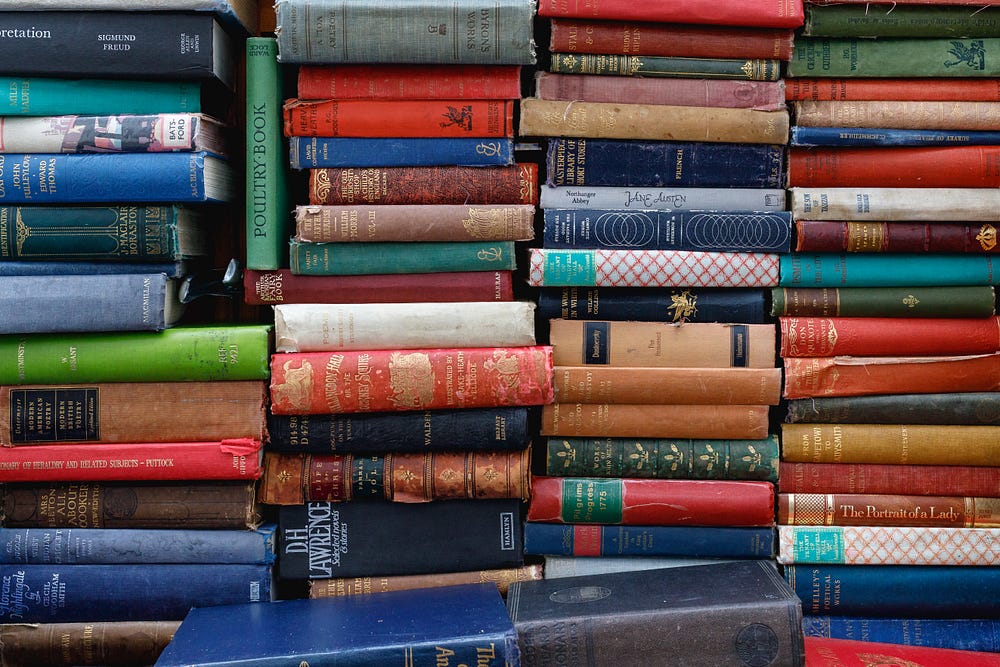
There are many ways to assess a year gone by, e.g. money, bonus, new cuountries visited, etc. One particularly useful way is to remember the books we read in the past year. To be sure, I did not complete meet my Goodreads (yup, I enjoy the app!) 2022 Reading Challenge (24 read vs a target of 30). 
Credit: Ed Robertson (Unsplash)

Nonetheless, 24 is a large enough number for me to pick out my top five books of 2022 and here they are (in no particular order):

1. Empires in the Sun: The Struggle for the Mastery of Africa by Lawrence James.

A concise, yet insightful, synopsis of Africa’s recent colonial history. The author extrapolates broad brush strokes from the many individual happenings around the continent — very useful for the reader. 

2. God’s Own Land: A Novel of Pakistan by Shaukat Siddiqui.

A classic Urdu novel set in 1950s Pakistan. God’s Own Land is the sort of novel which deserves to be in school curriculums. It pierces the universal human condition while at the same time provides deep insights into Pakistani society (many of which remain valid seven decades later). 

3. Night Train to Lisbon by Pascal Mercier, Barbara Harshav (Translator). 

A wonderful novel about searching and finding. The plot unravels slowly and with elegance as the characters are fleshed out. A good read when in a pensive, soul searching frame of mind. 

4. How to Be an Existentialist: or How to Get Real, Get a Grip and Stop Making Excuses by Gary Cox

It’s hard to go wrong with Existentialism as a philosopy. It is, after all, a philosophy of action even though it may be cerebral in its literary form. A great ‘how to’ compendium with a dash of humor thrown in .. wordy at times but comprehensible. 

5. Red Metal by Mark Greaney

Technically a war novel, but Red Metal becomes a little more given the Ukraine war playing out as I write this. The book is a fictional account of a war between Russia and NATO. Yes, it’s a novel, i.e. fiction, but there is a strong element of realism in the writings. A good, exciting novel for readers of the war genre. 

What books are on your reading list for 2023? Please share your recommendations in the comments below.

Friday, 17 May 2019

The Girl on the Train: a film review


The Girl on the Train directed by Tate Taylor based on the best selling novel by Paula Hawkins was perhaps better left as a novel. For the first hour of the almost two hour long movie it was difficult to follow the plot or make a mental note of the characters. Yes, the pace improved in the second half and, at the very least, the main characters were no longer confusing.


The story revolves around an alcoholic divorcee woman, Rachel, who becomes obsessed with a couple living in a house she passes on her daily commute into Manhattan. One day during these daiy voyeuristic commutes Rachel witnesses the woman kissing a man who is not her husband. Having been through a divorce with an unfaithful husband – who lives in their jointly purchased house a few doors down from the couple she obsesses about – Rachel loses it.

Rachel, known for making unannounced visits to her ex-husband's home, subsequently tries to visit the apparently unfaithful woman (Megan) to give her a piece of her mind. Unfortunately for Rachel as she was in her usual drunken stupor she has little recollection of what transpired during that fateful visit. Unfortunate because that night Megan mysteriously disappeared. 

The story slowly unravels and the viewer pieces together the puzzle, all the while learning more about each character. (Yes, you know the old adage: don't judge a book by its cover.) 

The Girl on the Train is billed as a psychological thriller on many move sites. That's a fallacy. At best it's a mystery - albeit incuding a side role for a mysterious psychiatrist. Only the strength of the acting held it together with great performances put in by the cast. In case anyone's asking, I would say the book might be the better bet!


Imran is a Singapore based Tour Guide with a special interest in arts and history. Imran has lived and worked in several countries during his career as an international banker. He enjoys traveling, especially by train, as a way to feed his curiosity about the world and nurture his interest in photography. He is available on twitter (@grandmoofti); Instagram(@imranahmedsg) and can be contacted at imran.ahmed.sg@gmail.com.

Thursday, 27 September 2018

The Peculiar Life of a Lonely Postman by Denis Theriault: a book review


It has been a long time since I have read an entire novel from start to end in one sitting. A few days ago I did exactly that with Theriault’s book, The Peculiar Life of a Lonely Postman.

That fact in itself makes several statements about the book.


Firstly, it’s an intriguing book that keeps the reader engrossed. Secondly, at 137 pages it’s not a long work. Above all, the author’s curious blend of language with a ‘realist fantasy’ story composed about a seemingly boring, everyday character makes Theriault’s novel difficult to put down.

The plot concerns an introverted postman – Bilodo - who becomes a voyeur of sorts by reading others personal letters. During this process he comes across regular correspondence between a man and a woman done entirely in haiku, a Japanese form of poetry. He becomes so immersed in this vicarious relationship that it takes over his life, much like alcohol takes over an alcoholic’s life.

The postman himself is a sad, forlorn character. The reader empathizes with him more and more as the story develops. Bilodo’s desire for ideal love; his social awkwardness and even the way he finds himself metamorphosizing into another character all make the reader feel for him.

The author’s language is poetic, simple yet descriptive. It evokes emotions of calmness and being in the moment. The words flow like a long poem, reminiscent of reading The Four Quartets by TS Elliot during my student days.

This is a book which can be read at various levels. It has a Kafkaesque feel to it. The book is reality and fantasy set in our contemporary wired society. The ‘unreal’ bits make a social statement. The novel will surely make it into university literature curriculums in the coming years.

The Peculiar Life of a Lonely Postman is a book which will resonate with a wide range of audiences. It has philosophical undertones and yet its greatest appeal lies in its simplicity. It is an elegant book deserving of much more than the few hours required to complete it.
__________________
Imran is a Singapore based Tour Guide with a special interest in arts and history. Imran has lived and worked in several countries during his past career as an international banker. He enjoys traveling, especially by train, as a way to feed his curiosity about the world and nurture his interest in photography. He is available on twitter (@grandmoofti); Instagram (@imranahmedsg) and can be contacted at imran.ahmed.sg@gmail.com

Monday, 24 September 2018

Secrets of State by Matthew Palmer: a book review


Secrets of State, a novel written by former US diplomat Matthew Palmer, is a sophisticated work of fiction. In his book Palmer weaves together a believable plot involving an US and Indian ‘deep state’ conspiracy to militarily destroy Pakistan. The story involves some classy character development, beginning with the main protagonist Sam Trainor.


The plot has ultra-nationalist patriots in the US and Indian collaborate to launch a (false flag?) nuclear attack on an Indian city in order to provoke an Indian military attack aimed at destroying Pakistan (once and for all). For the Americans, the motive is to ‘protect’ the world by preventing Pakistani nukes from following into the wrong hands, i.e. Islamic extremist terrorists.

Through chance, coincidence or synchronicity a retired US South Asia specialist, Sam Trainor, gets a whiff of the plot and starts investigating through his network of Washington contacts. Pretty soon Trainor finds himself in hot waters and realizes he is onto something big.  

Meanwhile, his clandestine love interest – an Indian diplomat at her country’s US mission – and his daughter – a do-gooder, socially conscious, young half-Indian woman doing development work in the slums of Mumbai – both find themselves sucked into the terrorist plot.

Despite what appears to be a far-fetched series of events, Palmer does a good job piecing the story together. He even adds some historical ‘make believe’ stories from time to time to give the novel greater believability. It works.

Events in Secrets of State move quickly. The reader is kept in suspense and will hardly notice the length (437 pages) of the novel. 

To be sure, the author cashed in on post 9/11 conventional wisdom which conveniently placed every international terrorist incident at Pakistan’s doorstep.[i] Nonetheless, Secrets of State is more nuanced than many post 9/11 ‘terrorist’ thrillers. Palmer’s fiction is a good addition to the genre. Anyone who enjoys a good geo-political thriller will find Secrets of State a good read.


[i] In the aftermath of 9/11, if an American in Washington DC caught the flu, it must have been a conspiracy involving biological weapons hatched in Pakistan’s governed tribal areas! Likewise, if a firecracker exploded unannounced on the streets of London it was an Islamic extremist attack planned and plotted by Pakistanis!

__________________
Imran is a Singapore based Tour Guide with a special interest in arts and history. Imran has lived and worked in several countries during his past career as an international banker. He enjoys traveling, especially by train, as a way to feed his curiosity about the world and nurture his interest in photography. He is available on twitter (@grandmoofti); Instagram (@imranahmedsg) and can be contacted at imran.ahmed.sg@gmail.com

Wednesday, 13 September 2017

The Iron Marshall by Louis L'Amour: a book review


L'Amour is the gold standard for novels set in the American West. His prolific output and his masterful storytelling endear him to any reader interested in the 'Wild West.'

It is therefor no surprise I have list track of the number of L'Amour books I have read over the years. I started reading his novels as a teenager and even after several decades his books don't disappoint.

To be sure, a classic Western story follows a formulaic model almost as predictable as a Bollywood movie. There is the hero – an almost bad guy who is at his core a good guy. The love interest who makes but fleeting appearances. The villain and his (or her) accompanying posse of bad guys (and gals).

However, it is L'Amour's ability to surprise within this formula which makes his novels entertaining, easy reads. Perhaps L'Amour pulls the reader so deep into the savage yet noble world of the Wild West that we forget the plot is simply a fairy tale of Good versus Evil.


The Iron Marshall is no different. A 'bad' good guy from 'civilized' New York city finds himself entangled in a small Western cowboy town. Before he knows it, our hero is the town Marshall and trying to unravel an intriguing criminal conspiracy. During his detective work, our hero deals with some 'real' bad guys. On his way to saving the town he also finds time for a 'love at first sight' encounter!

It all sounds rather unbelievable though when told by an experienced wordsmith the story is not only believable but also entertaining. For the un-initiated L'Amour reader The Iron Marshall may not be the best place to start. However, for those of us running out of L'Amour works to read this novel is as good as place as any to lose oneself in rough and tumble of the Wild West.


Imran is an adventurer, blogger, consultant, guide, photographer, speaker, traveler and a banker in his previous life. He is available on twitter (@grandmoofti); instagram (@imranahmedsg) and can be contacted at imran.ahmed.sg@gmail.com.

Saturday, 2 September 2017

The 786 Cybercafe: book review


Bina Shah's book was a nostalgic read for me. As a (Singaporean) Karachite the novel's setting in late 1990s Karachi was a reminder of my own time in Pakistan's commercial capital. The author's descriptions of city streets, shops and even its beaches all evoked special memories for me.


As literature, The 786 Cybercafe is a good effort. The story was realistic. It gives unfamilar readers an insight into Karachi. Thankfully, the author refrained from turning the novel into an explicit political commentary. Ms. Shah refrained from making judgements about Pakistan's urban social values. Instead, the reader is left to make up one's own mind about these traditions.

The characters - mainly young people reflecting the city's youth population bulge developed well as the story progressed. Surely, they were at times stereotyped but I guess it's to wrote a novel without some degree of stereotyping.

The plot was enjoyable, especially the latter half of the book where I found myself wishing to rush ahead to learn the fate of Nadia – the book's main female character. Indeed, through Nadia the author makes an understated yet powerful feminist statement. (It is entirely possible that many readers may not even grasp these serious feminist undertones.)

The 786 Cybercafe is time well spent. The novel particularly resonates with readers curious about Pakistan's social milieu. While at its heart the book is a simple story, the author does weaves subtle social messages into the plot.


Imran is an adventurer, blogger, consultant, guide, photographer, speaker, traveler and a banker in his previous life. He is available on twitter (@grandmoofti); instagram (@imranahmedsg) and can be contacted at imran.ahmed.sg@gmail.com.