Showing posts with label nonfiction. Show all posts

Monday, 2 January 2023

My top 5 books from 2022

There are many ways to assess a year gone by, e.g. money, bonus, new cuountries visited, etc. One particularly useful way is to remember the books we read in the past year. To be sure, I did not complete meet my Goodreads (yup, I enjoy the app!) 2022 Reading Challenge (24 read vs a target of 30). 
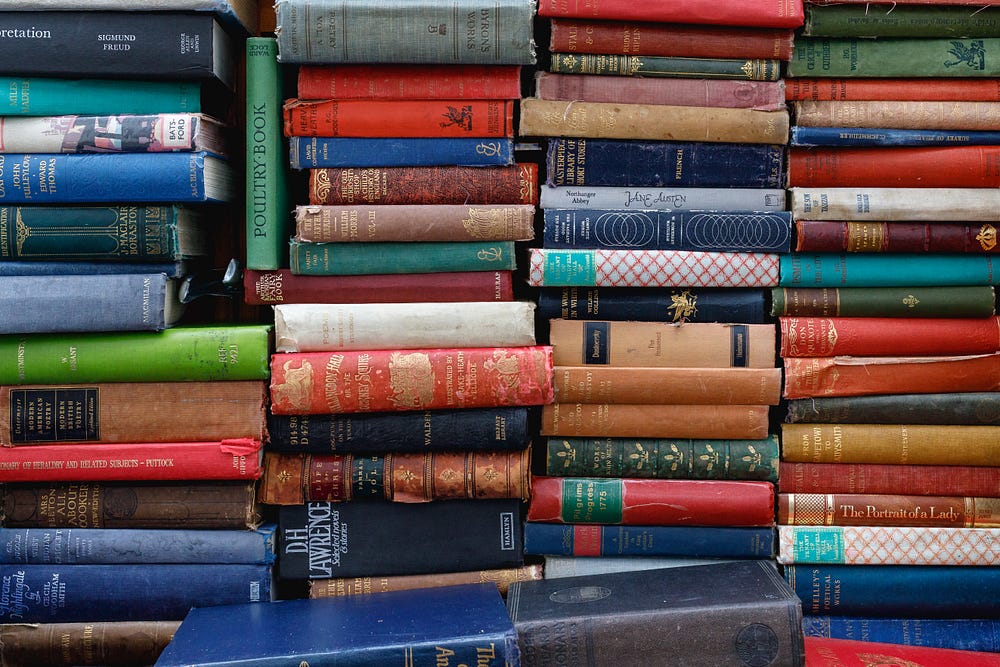
Credit: Ed Robertson (Unsplash)

Nonetheless, 24 is a large enough number for me to pick out my top five books of 2022 and here they are (in no particular order):

1. Empires in the Sun: The Struggle for the Mastery of Africa by Lawrence James.

A concise, yet insightful, synopsis of Africa’s recent colonial history. The author extrapolates broad brush strokes from the many individual happenings around the continent — very useful for the reader. 

2. God’s Own Land: A Novel of Pakistan by Shaukat Siddiqui.

A classic Urdu novel set in 1950s Pakistan. God’s Own Land is the sort of novel which deserves to be in school curriculums. It pierces the universal human condition while at the same time provides deep insights into Pakistani society (many of which remain valid seven decades later). 

3. Night Train to Lisbon by Pascal Mercier, Barbara Harshav (Translator). 

A wonderful novel about searching and finding. The plot unravels slowly and with elegance as the characters are fleshed out. A good read when in a pensive, soul searching frame of mind. 

4. How to Be an Existentialist: or How to Get Real, Get a Grip and Stop Making Excuses by Gary Cox

It’s hard to go wrong with Existentialism as a philosopy. It is, after all, a philosophy of action even though it may be cerebral in its literary form. A great ‘how to’ compendium with a dash of humor thrown in .. wordy at times but comprehensible. 

5. Red Metal by Mark Greaney

Technically a war novel, but Red Metal becomes a little more given the Ukraine war playing out as I write this. The book is a fictional account of a war between Russia and NATO. Yes, it’s a novel, i.e. fiction, but there is a strong element of realism in the writings. A good, exciting novel for readers of the war genre. 

What books are on your reading list for 2023? Please share your recommendations in the comments below.

Monday, 23 July 2018

Burning Country: Syrians in Revolution and War - a book review


Think your life is complicated? Try figuring out the Syrian war. Only then can one really know what complicated means.

Burning Country: Syrians in Revolution and War, coauthored by Robin Yassin-Kassab and Leila Al-Shami, tries to lucidly dissect the state of the nation as at 2016. Sure, it's hard for academic works to keep pace with the fast changing ground realities of the country. However, Burning Country does provide a summary of events which led to Syria becoming a playground for opposing forces, including Assad, Islamic State (ISIS) and Kurdish Leftist groups.


Both authors suggest the present state of affairs is a byproduct of a home grown revolution designed only to overthrow the Assad patriarchal state. Due to the Assad regime's brutally violent counterrevolutionary response a power vacuum ensued. It's this power vacuum which has been filled by opposing domestic forces as well as the (none too invisible) hands of foreign influences.

The Gulf monarchies, Iran, Russia, Turkey and the US exercise varying degrees of influence to protect their interests. The authors' are cynical of virtually all foreign countries indicating no nation recognizes the Revolution as indigenous and none does much to address the humanitarian crisis tearing Syria apart. Indeed, the book suggests foreigners play a dirty, selfish game by maintaining a balance of power between several domestic players – as long as ISIS is kept in check.

Burning Country underscores the complexities of modern Middle Eastern politics. It's a sad book to read as the reader clearly sees the train wreck arising out of the many missteps and gradual militarization of an erstwhile civil disobedience movement. The slow destruction of a state with the consequent impact on millions of lives is apparent for all to see (refugee crisis anyone?).

Undoubtedly, Syria has now gone the way of Afghanistan (Iraq?). It ceases to be a 'normal' nation state and will be difficult, if not impossible, to fix in the coming decades. Not least because of the substantial depopulation and sectarian hatred besetting today's Syria.


Imran is a Singapore based Tour Guide with a special interest in arts and history. Imran has lived and worked in several countries during his career as an international banker. He enjoys traveling, especially by train, as a way to feed his curiosity about the world and nurture his interest in photography. He is available on twitter (@grandmoofti); Instagram(@imranahmedsg) and can be contacted at imran.ahmed.sg@gmail.com.

Monday, 23 April 2018

Pitch Perfect – How to Say it Right the First Time, Every Time: a book review


Bill McGowan and Alisa Bowman’s book is a prescription for public speaking success. It hits the mark though more so for those with some prior public speaking experience. For novices, there are likely better places to start and ‘graduate’ to Pitch Perfect.


The attempt to package McGowan’s ideas (it seems Alisa Bowman is a collaborating writer helping with copy) using catchy, easier to remember principles, e.g. the Pasta Sauce Principle, the Draper Principle, doesn’t work as well as McGowan may like to believe. They make sense while reading the chapters but is one really going to remember the Draper Principle based on the name of some television character?

Nonetheless, the book is a thoughtful ‘contemporization’ of presentation principles for the Social Media age. Public speaking is not what it used to be before the age of live streaming on social media and just because a speaker is learned and has many acronyms (Phd, MPhil, etc.) attached to his name doesn’t make her speech a must see. Indeed, academics and senior corporate types stuck in their world of jargon and knowledge delivery may benefit most from such self-help books.

For those wishing to perfect public speaking techniques Pitch Perfect will strike a chord though perhaps not too loudly. Like any good self-help book, the author has shared his expertise in the field but to benefit the reader must practice constantly by applying the principles highlighted by the author. Not always an easy thing to do, even for those with regular public speaking engagements.
__________________
Imran is a Singapore based Tour Guide with a special interest in arts and history. Imran has lived and worked in several countries during his past career as an international banker. He enjoys traveling, especially by train, as a way to feed his curiosity about the world and nurture his interest in photography. He is available on twitter (@grandmoofti); Instagram (@imranahmedsg) and can be contacted at imran.ahmed.sg@gmail.com.

Monday, 9 April 2018

Dream Cities: Seven Urban Ideas That Shaped the World by Wade Graham – a book review


After reading this book, it seems amazing to try and understand modern human history without any familiarity with cities, urbanization and the development of the metropolis. In many ways, urbanization has been the driving force behind human progress over the last few centuries, since the Industrial Revolution.

There is no doubt much of contemporary human culture and social tradition is intertwined with the urban area. Cities have developed their own culture and lifestyle and much of that is based on the living arrangement within each city, i.e. the unique architectural blend of each city. For example, Singapore will not be Singapore without its HDB (Housing Development Board) estates. From its ‘coffee shop’ culture to its ‘New Town Centers’ the HDB estate is the cornerstone of a certain unique Singaporean lifestyle.


In order to help readers make sense of different styles, Wade Graham organizes his book by theme and in a loose chronological sense. Each chapter covers a basic architectural idea, e.g. Castles, Monuments, Malls, etc. For a non-architecture type like me, it appears these categories – at least to some extent – represent the thought of the author and may be controversial to others. Undoubtedly, some architectural historians will dispute the categories and propagate their own different framework for the development of urban architectural styles.

The author’s deep knowledge of recent architectural designs comes out clearly in the book. Different architects are ‘humanized’ in the work through cross referencing the impact of their personal lives on their work. However, at times, perhaps due to the author’s deep knowledge, the book gets dry and difficult to read. Paragraphs extend into pages and laypersons like me get bored.

Wade Graham’s Dream Cities is a book any social thinker will benefit from reading. However, if I had started my journey into architectural history with an easier book I might have benefited from Graham’s analytical insights more. The importance of understanding urban geography in the modern world means this will likely not be my last book on the subject.
__________________
Imran is a Singapore based Tour Guide with a special interest in arts and history. Imran has lived and worked in several countries during his past career as an international banker. He enjoys traveling, especially by train, as a way to feed his curiosity about the world and nurture his interest in photography. He is available on twitter (@grandmoofti); Instagram (@imranahmedsg) and can be contacted at imran.ahmed.sg@gmail.com.

Saturday, 17 March 2018

Gravitas by Caroline Goyder: a book review


Self-improvement books are a nice way to make one feel good. They energize one while reading. Indeed, we make all sorts of mental promises to implement the many wonderful suggestions contained in the book.


That is the case with virtually all self-improvement books. The difference between a nice and a great self-improvement book is whether one carries through with all those promises and suggestions.

Are the recommendations easily remembered in a catchy way? How practical are they for one’s life? Surely, there is an element of personal motivation involved though much of that hurdle was already crossed when a reader picks up a specific title.

Gravitas by Caroline Goyder had more potential than the author realizes. The entire book is readable. No doubt about that. It was well organized. It revealed insights; it used catchy acronyms.

Still, it just didn’t quite get there. It’s difficult to say why. Perhaps it was an (ostensible) lack of depth which turned me off. It just lacked that ‘gravitas’ associated with a terrific read. Nonetheless, if you have a few hours - say on an intercontinental airplane journey - Gravitas is not a bad way to fumble in and out of sleep.


Imran is an adventurer, blogger, consultant, guide, photographer, speaker, traveler and a banker in his previous life. He is available on twitter (@grandmoofti); Instagram (@imranahmedsg) and can be contacted at imran.ahmed.sg@gmail.com.