Tuesday, 31 January 2023

Turkiye or Turkey: ten weeks of exotic adventures!

Not many people in their right mind have the desire (or privilege!) of spending ten weeks playing in a foreign country. But spending ten weeks twice traveling in the same country, does that border on insanity?

Alright, so call me crazy but we're back in Turkey to explore a different part of this vast and massive country!

It's not that the COVID-19 pandemic is over (is it really?), no, it's simply that Turkey fascinates me on so many different levels. From the Kemalist legacy to the more recent attempt to fuse with Islam with modernity by Erdogan and his Islamist party; from the beauty of Mount Ararat – the landing place of Noah's arl - to the magnificent Van Lake near the Iran border.

Van Lake in eastern Turkey 
(Photo by Leyla Helvaci: https://www.pexels.com/photo/lake-van-coast-turkey-9793024/)

Our previous travels took us east deep into the Kurdish heartlands and within a heartbeat of Turkey's borders with Iran, Georgia and Syria. (If you wish to read about my previous extended visit in 2019 please click here.)

On this visit, the plan is to travel east – if you start in Istanbul then there is no choice but to go east! - subsequently heading south towards Cyprus (hopefully taking in both the Greek and Turkish sectors!). After Cyprus we will hug the Meditarranean Sea coast and head back towards Istanbul.

At least, that's the general plan. The final itinerary is 'TBD' subject to logistics, accomodation and the enjoyability of any particular city along the way. That is, if we enjoy any particular city we may extend our stay ... a flexible travel plan has its benefits.

So what's with the fascination for Turkey? Two distinct reasons, although a discussion on the subject will be never ending.

(Photo by Kübra Arslaner: https://www.pexels.com/photo/crop-person-showing-postcard-with-photography-of-old-city-7790175/)

Firstly, the Ottoman Empire in all its forms. From the many Ottoman monuments found across the country to the indelible legacy left by an Empire that controlled territories in three continents for five centuries. (As an amateur historian, the Ottoman Empire and particularly its later ceturies from the 1800s onwards are one of my areas of interest.)

Secondly, Ataturk and the establishment of the modern Turkish Republic in 1923. The decline and ultimate dissolution of the Ottoman Empire led to a radical experiment in modernization led by staunch secularist and reformer Mustafa Kemal.

Ataturk's policies, often referred to as Kemalism, laid the foundation for today's Turkey. To be sure, much has changed in the one hundred years since Ataturk proclaimed the Republic. Headscarves have made a comeback and political Islam is no longer the taboo it was as recently as the 1990s. Indeed, a headscarf wearing first lady, Mrs Erdogan, now hosts foreign diginitaries at the presidential palace on behalf of the Turkish state. (A headscarf in the presidential palace? Blasphemous thinking until a few decades ago!)

Mustafa Kemal 'Ataturk' 
(Photo by Imran Ahmed. All rights reserved.)

To have a front seat to watch the incredible social changes and economic transformation of Turkey has been enthralling. And watching while criss crossing the country taking in the sights and gorging on delicious kebabs is an experience like no other.


I am a Singapore based Tour Guide with a special interest in arts and history. I have lived and worked in several countries during my career as an international banker. I enjoy traveling, especially by train, as a way to feed y curiosity about the world and nurture my interest in photography. I am available on twitter (@grandmoofti); Instagram(@imranahmedsg) and can be contacted at imran.ahmed.sg@gmail.com.


Thursday, 19 January 2023

Searching for Pakistan's Jewish heritage: Karachi's Jewish Cemetery


At Pakistan's Independence in 1947, the country's Jewish community numbered between 1,000 – 2,500, with most residing in the port city of Karachi. Based on official data, by 2019 the number had reduced to 809. Some observers suggest the actual number of Jews in Pakistan may be closer to 200 – 300 persons.

A Jewish wedding Mehndi ceremony in Karachi, 1959.
(Wikipedia: public domain)

The reduction in Pakistan's Jewish community is attributable to two main factors.

Firstly, the creation of Israel in 1948 resulted in the first wave of migration out of the country. Secondly, as a Muslim majority state, Pakistan was not immune to increasing anti-Israeli sentiment, especially witin the Islamic world, as a result of the intensification of the Palestine - Israeli conflict. This resulted in a second wave of overseas migration by Pakistani Jews after the 1967 Arab - Israeli war.

Nonetheless, until the 1970s, Jews were a small but visible community in Karachi. It is not unusual to come across older Karachites who had Jewish school friends or classmates in those days. Indeed, Karachi's Jewish Synagogue or Yehudi Masjid (Jewish Mosque) survived until the late 1980s. In 1988, the valuable piece of land was finally expropriated for commercial uses. (Apparently, a synagogue - albeit abandoned - still stands in Rawalpindi though I have not seen it personally.)

Among the most visible vestiges of Karachi's Jewish community is the Bani Israel Jewish Cemetery. The Jewish cemetery is part of the larger Mewa Shah Qabaristan (cemetery), an interfaith cemetery which also contains a Christian burial ground. The Mewa Shah Cemetery remains in regular use, though the Jewish Cemetery seems to get few visitors.

Photo by author (© All rights reserved)

I visited the Jewish Cemetery during my recent travels to Pakistan. Tombs and headstones of many members of Karachi's Jewish community still stand proud, even if decayed. To be sure, the graveyard has seen better days as it appears there has not been any maintenance for several decades.

In the media, one reads reports about efforts by Pakistani Jewish activist Fishel BenKhald to restore the Bani Israel Cemetery. Indeed, families living within the cemetery compound (descendants of the original caretakers of the cemetery presumably) speak of an individual (BenKhald?) who has visited several times and spoken of rehabilitating the cemetery.

Photo by author (© All rights reserved)

Notwithstanding BenKhald's endeavors, Pakistanis in general and Karachites in particular, have an obligation to preserve the city's multireligious heritage. Karachi's development has seen many prominent citizens of varying religious backgrounds, e.g. Nadir Edulji Dinshaw the renowned Parsi philanthropist, make sigifnicant contributions. Karachi must honor its diverse historic legacy. Hopefully, the Bani Israel Jewish Cemetery will be restored – with or without the government's assistance - to its former glory and members of Pakistan's Jewish diaspora will be able to freely visit the graves of their ancestors.


I am a Singapore based Tour Guide with a special interest in arts and history. I have lived and worked in several countries during my career as an international banker. I enjoy traveling, especially by train, as a way to feed y curiosity about the world and nurture my interest in photography. I am available on twitter (@grandmoofti); Instagram(@imranahmedsg) and can be contacted at imran.ahmed.sg@gmail.com.


Wednesday, 11 January 2023

Je Suis Karl: slow moving but great story (a film review)


Je Suis Karl may be cliched in many respects but the movie does represent the chaos, confusion and resultant dangers of our times.


A scared, young survivor of an attack becomes another victim of a radical, extremist group plotting to shift opinion through the savvy use of social media.

For some, the film will be an eye opener about the lengths to which some groups are willing - and able - to go to further their political agendas.

Je Suis Karl is a believable story set in the backdrop of the political polarization found not only in Europe but across many parts of the world.

The movie may move slowly initially but the story picks up pace as the plot unfolds. A worthwhile film for the politically inclined film goer.

__________________________________________

Imran is a Singapore based Tour Guide with a special interest in arts and history. Imran has lived and worked in several countries during his career as an international banker. He enjoys traveling, especially by train, as a way to feed his curiosity about the world and nurture his interest in photography. He is available on twitter (@grandmoofti); Instagram(@imranahmedsg) and can be contacted at imran.ahmed.sg@gmail.com.

Monday, 2 January 2023

My top 5 books from 2022

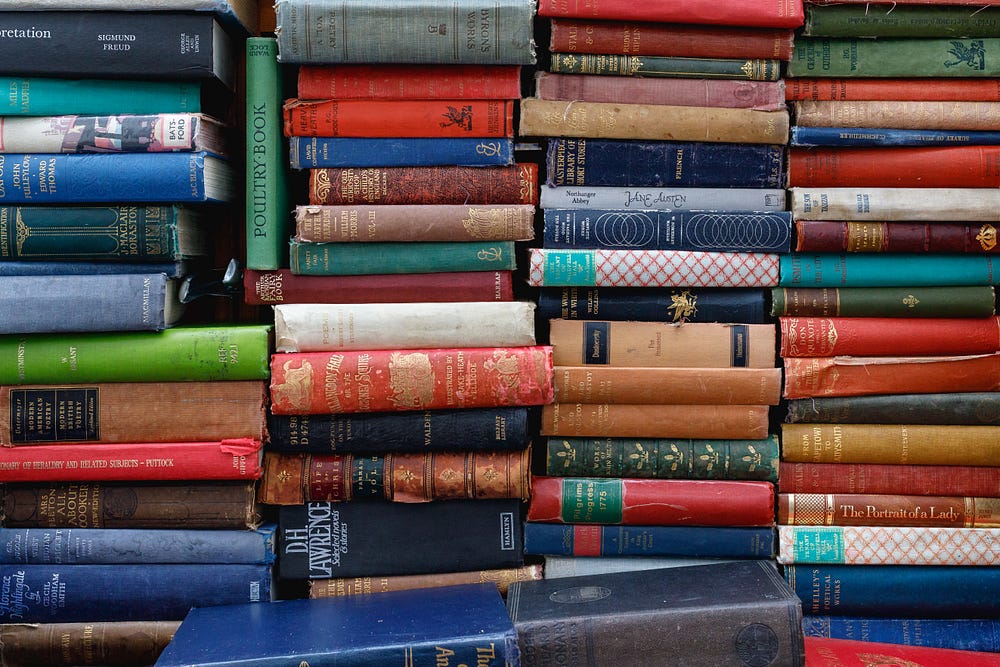
There are many ways to assess a year gone by, e.g. money, bonus, new cuountries visited, etc. One particularly useful way is to remember the books we read in the past year. To be sure, I did not complete meet my Goodreads (yup, I enjoy the app!) 2022 Reading Challenge (24 read vs a target of 30). 

Credit: Ed Robertson (Unsplash)

Nonetheless, 24 is a large enough number for me to pick out my top five books of 2022 and here they are (in no particular order):

1. Empires in the Sun: The Struggle for the Mastery of Africa by Lawrence James.

A concise, yet insightful, synopsis of Africa’s recent colonial history. The author extrapolates broad brush strokes from the many individual happenings around the continent — very useful for the reader. 

2. God’s Own Land: A Novel of Pakistan by Shaukat Siddiqui.

A classic Urdu novel set in 1950s Pakistan. God’s Own Land is the sort of novel which deserves to be in school curriculums. It pierces the universal human condition while at the same time provides deep insights into Pakistani society (many of which remain valid seven decades later). 

3. Night Train to Lisbon by Pascal Mercier, Barbara Harshav (Translator). 

A wonderful novel about searching and finding. The plot unravels slowly and with elegance as the characters are fleshed out. A good read when in a pensive, soul searching frame of mind. 

4. How to Be an Existentialist: or How to Get Real, Get a Grip and Stop Making Excuses by Gary Cox

It’s hard to go wrong with Existentialism as a philosopy. It is, after all, a philosophy of action even though it may be cerebral in its literary form. A great ‘how to’ compendium with a dash of humor thrown in .. wordy at times but comprehensible. 

5. Red Metal by Mark Greaney

Technically a war novel, but Red Metal becomes a little more given the Ukraine war playing out as I write this. The book is a fictional account of a war between Russia and NATO. Yes, it’s a novel, i.e. fiction, but there is a strong element of realism in the writings. A good, exciting novel for readers of the war genre. 

What books are on your reading list for 2023? Please share your recommendations in the comments below.

Tuesday, 27 December 2022

How to Be an Existentialist or How to Get Real, Get a Grip and Stop Making Excuses - a book review


Philosophy is not easy to dumb down - or at least a sophisticated and complex philosophical world view like existentialism. Nonetheless, in this brief work, Cox has done an admirable job in simplifying existentialism. 

To be sure, there are paragraphs which require rereading to be understood but, by and large, Cox succeeds in explaining authenticity, bad faith, freedom and other critical aspects of existentialism succinctly. 

Cox's work is a nice recap for readers familiar with the existentialism of Sartre (and others). For newbies, it's a good place to start though some knowledge of the existentialist world view will help.

Saturday, 24 December 2022

Pakistan in 2023: optimism is hard to find


It's hard to be optimistic about Pakistan these days. The country's multiple crises are coming together to bring about a perfect storm. (I can't remember when the country was last in non-crisis mode?)

Credit: Unsplash - The Artist Studio

The two main political parties contending for power - Nawaz Sharif's (now Shehbaz Sharif's?) PML-N and Imran Khan's PTI - are playing a savage game of musical chairs in Islamabad and several provincial capitals. There is even less focus on governance than is usually the case.

And governance is what is required to pull Pakistan's economy back from the precipice. Ordinary Pakistanis are already struggling under the weight of 30 percent plus food price inflation (officially) pushing food insecurity to a level not seen in several decades. Moreover, electricity brownouts and gas shortages have expanded such that Islamabad seeks to implement policies to encourage reduced consumption (increasing suppy to keep pace with demand is much too difficult as it requires strategic planning). Foreign exchange is in such short supply that each day we receive news of more factories suspending production due to lack of imported raw materials. It's a mess even before one mentions the 'circular debt' plaguing the energy sector – which gets worse with each passing day.

All this while the security situation deteriorates alarmingly (let's talk some more with the Taliban?!). Afghanistan's Taliban government has reinvigorated, many would also say supported, the Tehreek-e-Taliban Pakistan (TTP) to carry out a series of high profile attacks especially in the western border province of Khyber Pakhtoonkhwa (KPK). These attacks have laid bare the state's claim that terrorism, particularly the TTP, had been defeated. No, the various groups were simply biding their time while regrouping. This time – and space - was provided to them by the recent attempt to negotiate. Releasing tens of militants from Pakistani jails by the authorities as a confidence building measure preceding the talks was simply icing on the cake.

Credit: Unsplash - Hassan Anwer

But wait, the bad news isn't finished yet. There's another open wound which has been festering for several decades and the infection looks to be spreading, i.e. the Baloch separatist movement. Despite the secular, republican nature of the Baloch insurgent movement there are whispers of collaboration between them and the revitalized religious extremists. The enemy of my enemy is my friend right?

Moreover, a nascent Sindhi nationalist movement has recently turned to violence - with the support of Baloch insurgents. Though it's a tentative, cautious shift at the moment, if a tight Sindhi-Baloch nationalist nexus is formed in future it spell more trouble (and violence) for Pakistan. Such violence, particularly if it emerges in Karachi, the country's commercial hub will further damage economic growth prospects. (Already business confidence within the city has been affected by a post-COVID resurgence in street crime.)

Unfortunately, most of these issues are systemic and cannot be wished away without sustained reform. (To be sure, having six, or was it seven, Finance Ministers in the last 4.5 years across two governments is not conducive to reform efforts!) Nonetheless, Pakistan has to start somewhere in order not to break more promises to its citizens.

Stay tuned (i.e.please follow!) for future posts in which I take a closer look at each of these subjects, including my suggestions for tackling these issues.

NB - I will be traveling to Pakistan in the next few weeks and will get a better understanding of ground realities following my visit.

Tuesday, 5 July 2022

Ukraine: a fight to the death!

As we head closer to the six month mark of the Ukraine war, the military confrontation is locked in a virtual stalemate. Despite Russia controlling about twenty percent of pre-war Ukraine there is little likelihood of a military victory by either side anytime soon.

NATO / US will fight until the last Ukrainian and the Russians are in no mood to talk either. The implications of this stubborn desire to fight are severe.

 Source: Pexels
1. Ukraine will suffer more widespread and intense destruction while Ukrainians will continue to be displaced as internal and external refugees (at least the Ukrainians can move freely to other countries!).

2. In a stalemate, NATO is tempted to escalate the war to achieve its aim of weakening Russia, i.e. more advanced weaponry in larger quantities will be sent to Ukraine. In turn, this will increase the likelihood of Russians attacking NATO supply lines within Ukraine but possibly also in Poland. Whether NATO starts protecting these vital supply routes inside Ukraine with 'disguised' NATO personnel (say as foreign mercenaries from the Ukrainian Foreign Legion) or contractors is an open question? Another potential flashpoint.

3. For its part, if Russia believes the war is shifting decisively away it will fall back to a long standing Cold War strategic doctrine, i.e. threaten to go nuclear. Subsequently, NATO will have to play 'nuclear' chicken over Ukraine and call Russia's bluff or threaten escalation itself.

4. Militarily the war can only get more dangerous. Both sides will feel the need to escalate if the balance tips to the other party. NATO and Russia have backed themselves into political corners domestically with little flexibility for a face saving climb down.

5. Oil, gas and food inflation will not subside while Western sanctions remain in force. Poorer nations will suffer disproportionately. Sri Lanka and Ecuador are examples of possible outcomes in many other states. Europe will also suffer due to disruptions in its energy supplies. Hence, European domestic discontent over the war will increase the longer the war lasts.

6. Post war (we'll have to think about a post-war world sometime!), the world will be left with roaming hordes of trained and weaponized far right extremists. These extremists, currently extolled as war heroes fighting for freedom and democracy, will pose an immediate threat to Europe's internal security as they transition from loose, individually driven anti-state movements to battle hardened entities with a chain of command (remember the origins of the Taliban?).

Source: Pexels
To be sure, in the current situation an early end to the war is unlikely. Thus, one wonders who benefits more from a protracted conflict, Russia or NATO?

In Russia war fatigue, especially as sanctions start to bite, will grow with time. Russia will also face problems recruiting soldiers as it runs out of able bodied people due to mounting casualties as well as war fatigue.

Similarly, Ukrainians too will run out of people. Perhaps that may precipitate soldiers from friendly countries like Poland, etc. be given 'leave of absence' to join the Ukrainian Foriegn Legion (of their own volition of course!) to supplement diminishing personnel in the Ukrainian army.

Moreover, as the cost of the war starts to hit US / European budgets, support for Ukraine will cool and feed an anti-war movement, especially as inflation hits people's wallets. This will ultimately force political leaders to shift focus from a military to a diplomatic solution. However, that may be many months away.

The Ukraine war has made the world a messy and dangerous place. Many countries will pay the price for what is essentially another European war (great power politics of the nineteenth century come to mind). One can only hope sanity prevails and efforts shift towards a political solution sooner rather than later. Only after peace is restored can the world can begin the difficult process of rebuilding.

______________________
Imran is an adventurer, blogger, consultant, guide, photographer, speaker, traveler and a banker in his previous life. Imran lives in Singapore. He is available on Instagram (@imranahmedsg) and can be contacted at imran.ahmed.sg@gmail.com.