Showing posts with label literature. Show all posts

Monday, 2 January 2023

My top 5 books from 2022

There are many ways to assess a year gone by, e.g. money, bonus, new cuountries visited, etc. One particularly useful way is to remember the books we read in the past year. To be sure, I did not complete meet my Goodreads (yup, I enjoy the app!) 2022 Reading Challenge (24 read vs a target of 30). 

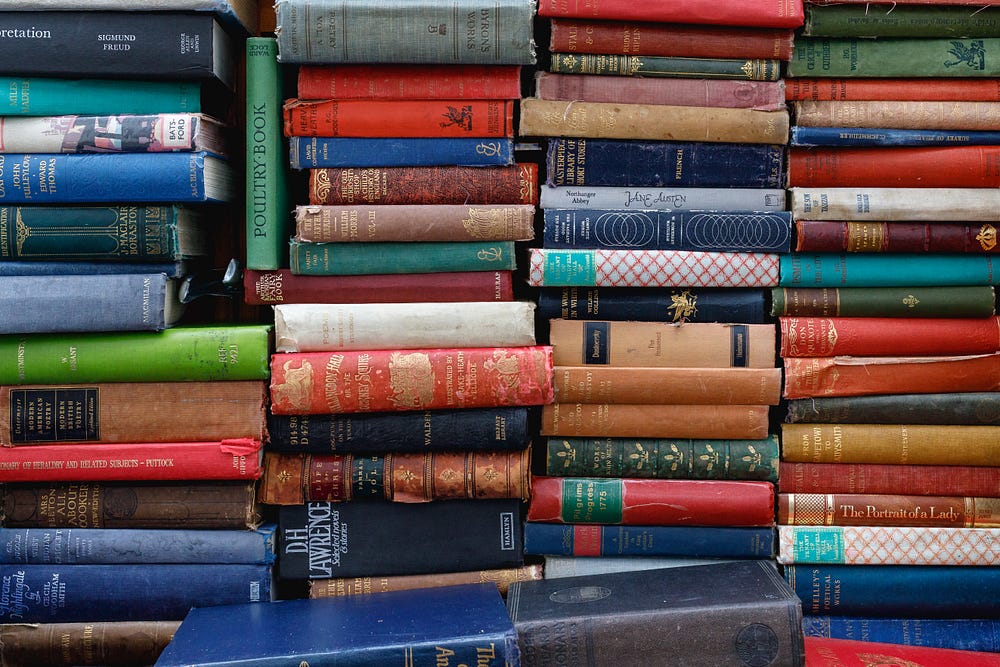
Credit: Ed Robertson (Unsplash)

Nonetheless, 24 is a large enough number for me to pick out my top five books of 2022 and here they are (in no particular order):

1. Empires in the Sun: The Struggle for the Mastery of Africa by Lawrence James.

A concise, yet insightful, synopsis of Africa’s recent colonial history. The author extrapolates broad brush strokes from the many individual happenings around the continent — very useful for the reader. 

2. God’s Own Land: A Novel of Pakistan by Shaukat Siddiqui.

A classic Urdu novel set in 1950s Pakistan. God’s Own Land is the sort of novel which deserves to be in school curriculums. It pierces the universal human condition while at the same time provides deep insights into Pakistani society (many of which remain valid seven decades later). 

3. Night Train to Lisbon by Pascal Mercier, Barbara Harshav (Translator). 

A wonderful novel about searching and finding. The plot unravels slowly and with elegance as the characters are fleshed out. A good read when in a pensive, soul searching frame of mind. 

4. How to Be an Existentialist: or How to Get Real, Get a Grip and Stop Making Excuses by Gary Cox

It’s hard to go wrong with Existentialism as a philosopy. It is, after all, a philosophy of action even though it may be cerebral in its literary form. A great ‘how to’ compendium with a dash of humor thrown in .. wordy at times but comprehensible. 

5. Red Metal by Mark Greaney

Technically a war novel, but Red Metal becomes a little more given the Ukraine war playing out as I write this. The book is a fictional account of a war between Russia and NATO. Yes, it’s a novel, i.e. fiction, but there is a strong element of realism in the writings. A good, exciting novel for readers of the war genre. 

What books are on your reading list for 2023? Please share your recommendations in the comments below.

Sunday, 9 August 2020

The Swing Trader's Bible by Matthew McCall and Mark Whistler: a book review


A good introduction to swing trading.


The authors do a good job identifying and explaining the multiple tools and instruments most commonly used for swing trading. Be warned, however, the book does not go into enough depth to be a stand alone master class on the subject. Traders are well advised to continue their education into the subject before taking the plunge into trading with real dollars and cents.


The book reads easily. The authors have simplified complex ideas well. The title is a good place to start for any aspiring swing trader - as long as the learning doesn't stop with this book.

______________

Imran is a Singapore based Tour Guide with a special interest in arts and history. Imran has lived and worked in several countries during his past career as an international banker. He enjoys traveling, especially by train, as a way to feed his curiosity about the world and nurture his interest in photography. He is available on Instagram (@imranahmedsg); twitter (@grandmoofti) and can be contacted at imran.ahmed.sg@gmail.com.

Monday, 8 June 2020

The Good Shepherd by C.S. Forester: a book review


“For in war the character and personality of the leader is decisive in events much more than questions of material.”

The Good Shepherd is a naval military classic - perhaps slightly dated for contemporary readers as it revolves around a group of naval vessels protecting numerous merchant ships in convoy transporting cargo from the US to its World War Two allies in Europe. Ships from several allied navies under the command of a young US naval officer, George Krause, are assigned to guard a convoy from marauding German submarine predators.


Forester’s novel is about character and leadership. The fast paced action and naval duelling are simply the containers through which the author reveals his insights.

Forester does an amazing job getting the reader inside Krause’s head. We know Krause loves black coffee and can guzzle an entire jug – hot or cold - without flinching. We also know he is a religious man whose decision making is influenced by his notion of Christian ethics.

Lives hang in the balance as the captain makes life and death decisions instantaneously, sometimes literally as whether to pick up enemy survivors drifting in the open sea. In these split second decisions, Krause must reach urgent compromises between husbanding convoy resources, cultural / political factors given the presence of ships from navies like Poland, etc., attack versus defence, maintaining moral leadership over his crew and inspiring the other crews.

Sometimes his decisions are explained while at other times these choices seem almost random flips of a coin. (Luck as a crucial element in leadership?)

More often than not, war literature is associated with armies and land based warfare. The Good Shepherd by C.S. Forester is a pleasant change. It brings to life the hopes, fears and desperations of a generation of seafarers who fought on earth’s vast oceans. The work is not only an adventure novel but also wanders into the realms of psychology. Though first published in 1955, Forester’s work has not lost any of its allure during the ensuing six decades.
__________________
Imran is a Singapore based Tour Guide with a special interest in arts and history. Imran has lived and worked in several countries during his past career as an international banker. He enjoys traveling, especially by train, as a way to feed his curiosity about the world and nurture his interest in photography. He is available on Instagram (@imranahmedsg); twitter (@grandmoofti) and can be contacted at imran.ahmed.sg@gmail.com.


Sunday, 12 April 2020

The Ladies Paradise by Emile Zola: a book review

French author Emile Zola (1840 – 1902) was above all a social observer. His works provide a window into the nineteenth century. The Ladies Paradise, first published in 1883, is a sociological study of the time disguised within an exceptional novel. 
The novel uses the lives of two principal characters – Mouret and Denise – to illustrate societal dislocations as a new order slowly destroys the old order. This includes the suffering of people unable to adjust and make way for the new and the hold outs hanging on to the past as if their entire being depended on it. 
Mouret is a new breed of businessman (entrepreneur?) radically transforming retail trade in Paris. He is powerful, focused and hard working. He is also used to getting what he wants out of life, including women. Few obstacles were strong enough to challenge the march of Mouret's vision in creating an universal department store selling all manner of things; that in an age of shops specializing in individual trades. For example,  one shop sold lace while another sold velvet and yet a third sold knick-knacks. None sold all three under one roof – that is until Mouret's store, The Ladies Paradise.
Denise is a poor, country girl who finds herself not only struggling to survive in the big city but also in the politics and chicanery of employees at Mouret's store. With a little help from Mouret, Denise survives a brutal initiation at the Ladies Paradise and starts to make her presence felt. (Mouret simply wants to add Denise to his list of conquests.) 
Life of course never moves in a straight line. Neither does a good novel. 
Over time, along with his obsession of growing his department store, Mouret's develops an unhealthy obsession with conquering Denise. Meanwhile, Denise has gathered all the wiles of any Parisian noblewoman and innocently uses Mouret's infatuation to influence the evolution of the Ladies Paradise. 
Zola is a master in symbolism and the novel contains notable use of the tool. The novel is written in rich, descriptive prose very different from the brief 'no extras included' copy writing in fashion today. While The Ladies Paradise will appeal to the analytical reader looking to obtain insights into the human psyche and society it is also a simple story of a young country girl out to survive in the glittering big city. 
__________________
Imran is a Singapore based Tour Guide with a special interest in arts and history. Imran has lived and worked in several countries during his past career as an international banker. He enjoys traveling, especially by train, as a way to feed his curiosity about the world and nurture his interest in photography. He is available on Instagram (@imranahmedsg); twitter (@grandmoofti) and can be contacted at imran.ahmed.sg@gmail.com.

Monday, 6 January 2020

The Gift of the Gab: How Eloquence Works by David Crystal – a book review


Anyone who presents regularly understands eloquence is not innate. It is a learned skill requiring much practice. Indeed, it can be compared to acting in that public speaking requires rehearsing and even choreography.


The Gift of the Gab: How Eloquence Works by David Crystal is a useful reminder of some of the things to get right for public speakers. While the book is comprised of many short chapters making it easier to read, it is also filled with complex technical advice about eloquence. In other words, Crystal uses his background as a linguist to good use during the book.

It’s not only about the language but also delivery. Delivery includes pauses, hand motions, posture, tones and a whole lot more. Crystal touches on all of them in his book.

Crystal also uses examples to highlight every section of the book. To be sure, the book is US centric in that the prime example of an ideal speech which recurs throughout is former president Obama’s ‘Yes We Can’ speech in Chicago, USA. Obama’s speech, along with Martin Luther King’s ‘I Have a Dream’ speech, are even added to the appendix for reference.

The Gift of the Gab is not the best place for a newbie to start learning about presentation skills – a mite technical for that. However, it will certainly help anyone improve who makes an effort to implement Crystal’s advice.
__________________
Imran is a Singapore based Tour Guide with a special interest in arts and history. Imran has lived and worked in several countries during his past career as an international banker. He enjoys traveling, especially by train, as a way to feed his curiosity about the world and nurture his interest in photography. He is available on Instagram (@imranahmedsg); twitter (@grandmoofti) and can be contacted at imran.ahmed.sg@gmail.com.

Wednesday, 28 November 2018

The Art of Doing Good: Where Passion Meets Action - a book review


For anyone wishing to do good - and who doesn't - this is a wonderful book! 

Let me clarify, this book is not a standard 'self-help' book. It is a practical manual for those who wish to start (or are already involved with) a non-profit organization. The book provides useful tips peppered with personal anecdotes from practitioners which promise to make the life of any social entrepreneur easier and, hopefully, more successful. 


Social entrepreneurship or starting / managing a voluntary welfare organization is complicated. There are no hard and fast rules. Much has to be learnt 'on the fly.' Nonetheless, the author's have done well to provide readers with some basic principles in starting, managing and growing such organizations. 

The Art of Doing Good is a specialized work, not for everyone. For those who wish to get into the field of social entrepreneurship this book is an excellent place to start the journey. 
______________

Imran is a former banker and has lived and worked in several countries during his international banking career. He enjoys traveling, especially by train, as a way to feed his curiosity about the world and nurture his interest in photography. He is a licensed freelance tour guide in Singapore. He is available on twitter (@grandmoofti); Instagram (@imranahmedsg) and can be contacted at imran.ahmed.sg@gmail.com

Saturday, 20 October 2018

Of riots, immigrants and Singapore’s Global Migrant Festival


Since the refugee crisis hit Europe issues pertaining to migration and population flows have moved up the global agenda. Back home in Singapore, the Little India Riot in 2013 was a shocker (riots in Singapore!) but also a wake-up call about the countries large but often unnoticed pool of low skilled labor.

One side effect of the renewed focus is the establishment of the Global Migrant Festival which takes place in Singapore in December 2018. As part of his research for an article on the festival for a Hong Kong English daily I received some questions from a journalist on the subject of migrants, immigration, etc.

A selection of the questions and my answers are reproduced below.

Syrian refugees at the main train station in Budapest, Hungary (source: Wikipedia)
Q. What do you think are circumstances that led to this festival? How do you see it as something different towards other cultural festival?

A. I don’t know the details of the festival other than the information listed on their website but understand it is geared towards an otherwise culturally neglected demographic of Singapore’s society, i.e. low income foreign workers. In many ways, this is a ‘local’ Singapore festival which hopefully over time will come to encompass the aspirations and talents of an often forgotten segment of immigrant communities. In coming years, as the festival becomes established, festival Organizers will have to walk a fine line between commercialization and maintaining the ‘grassroots’ spirit / intent of the founders.

Q. What problems are they trying to remedy or at least articulate/engage with?

A. Humanizing a demographic of society which is often seen but almost never heard. Without this community many cities, including Singapore, would grind to a standstill. Additionally, I am sure there are lots of hidden talents among festival participants so bringing these talents out will be a service to not only the individuals but also the entire arts community.

Q. Singapore had a setback with the Little India race riots in 2013. How do you think things have changed (or not) since then? 

A. The wording of your question is interesting. Not everyone will refer to the 2013 Little India riots as a race riot. The riot was a seminal moment for Singapore in that it highlighted to broader Singaporean society the need to focus on a minimum quality of life for *all* residents of Singapore, not only Singaporeans and top end foreign talent. Much has been achieved since then because of this focus on the lower paid foreign workers by the government as well as a burgeoning NGO sector. Arguably, this festival itself is a by-product of the 2013 Little India riots.

Q. What do you think can be done to encourage more discussion and community engagement with migrant/immigration issues? Is there anything particularly that requires a shift in debate?

A. It’s a sad testament to the modern world but it took large waves of uncontrolled refugee migration to the developed Europe, especially from Iraq and Syria, for the international community to realize immigration issues are real and must be studied for greater understanding. Poorer countries have faced refugee crises for many decades since in the post-war period, most notably three million plus Afghani refugees in Pakistan during the first Afghan war and many parts of Africa. 

‘Humanizing’ migrant workers and introducing them as real people with hopes, wants, fears, etc. through literature and the arts is a great starting point. Given that foreigners – of all skill levels – comprise approximately 30 percent of our population including sections on such migrant communities in academic courses / syllabi at various levels of learning in our educational institutions should be considered.

I hope we will see more high quality literature and visual arts emerge on the experiences of migrant populations as a result of this increased focus. This festival is a step in the right direction.

Q. How can awareness of these issues help drive change and inclusion in the following sectors? Education, art and culture, employment

A. As I mentioned earlier, including sections on the role of migrant workers in keeping Singapore running smoothly may be included in school syllabi. Additionally, the government may allocate more funding to academic efforts to understand the challenges faced by new citizens and / or migrant workers. Increased funding will lead to more and better research and, hence, greater understanding.

A broad debate on making Mandarin a compulsory subject in school for all Singaporeans until, say, P6 should be initiated. In a majority Chinese society where Mandarin is the lingua franca of the bulk of the population, not speaking Mandarin acts as a glass ceiling as well as a hidden barrier for integration.

Q. Some of the key social issues include concerns of immigrants taking up white-collar jobs, driving property prices up and occupying places in schools and hospitals. How do you think these concerns can be better addressed by the government and individuals?

A. This is a broad policy debate and pertains to Singapore’s historic economic growth model pursued over the last few decades, i.e. grow the population to sustain economic growth. We have gone from approximately three million residents in 2000 to 5.6 million today. That’s a big jump and brings with it not only economic growth but a multitude of ancillary social issues – intended and unintended.

Growth is not an end in itself. A blind focus on generating economic growth misses the point. Economic growth is a means to a fairer, more just and happier society.

As Singapore has achieved levels of affluence comparable to the likes of Switzerland and Austria, Singaporeans must now shift their focus to other aspects of social maturation. These are difficult questions relating to distribution of wealth, taxation structures, provision and subsidies of medical services and so on.

The question of immigration is part of a larger rethink which Singaporeans must undertake about the future priorities of our society.

Q. Cultural identity is always ridiculed or dismissed as being diluted in Singapore. What can be done to discourage this mindset and see more proactiveness from Singaporeans to articulate or develop this 'identity'?

A. National identity is not static. Nor is at an end point a society must achieve. National identity is dynamic. Like any vibrant society, Singapore’s identity is also constantly evolving over time.

Openness to new ideas is necessary for society to thrive, especially in today’s fast paced world. Foreigners – whether immigrants or transient – are a historic part of Singapore’s population landscape and contribute significantly to our melting pot of ideas.

I don’t accept the idea that Singapore’s identity is diluted by immigration or migrant workers. On the contrary, over the course of time, Singapore’s identity is strengthened by new and diverse population groups.

Take Hainanese chicken rice and roti prata, two quintessential markers of modern Singaporean identity. These dishes did not develop in a cultural vacuum. They developed through the interaction of various different immigrant populations on this Little Red Dot.
______________
Note: Imran is a former banker and has lived and worked in several countries during his international banking career. He enjoys traveling, especially by train, as a way to feed his curiosity about the world and nurture his interest in photography. He is a licensed freelance tour guide in Singapore. He is available on twitter (@grandmoofti); Instagram (@imranahmedsg) and can be contacted at imran.ahmed.sg@gmail.com

Thursday, 27 September 2018

The Peculiar Life of a Lonely Postman by Denis Theriault: a book review


It has been a long time since I have read an entire novel from start to end in one sitting. A few days ago I did exactly that with Theriault’s book, The Peculiar Life of a Lonely Postman.

That fact in itself makes several statements about the book.


Firstly, it’s an intriguing book that keeps the reader engrossed. Secondly, at 137 pages it’s not a long work. Above all, the author’s curious blend of language with a ‘realist fantasy’ story composed about a seemingly boring, everyday character makes Theriault’s novel difficult to put down.

The plot concerns an introverted postman – Bilodo - who becomes a voyeur of sorts by reading others personal letters. During this process he comes across regular correspondence between a man and a woman done entirely in haiku, a Japanese form of poetry. He becomes so immersed in this vicarious relationship that it takes over his life, much like alcohol takes over an alcoholic’s life.

The postman himself is a sad, forlorn character. The reader empathizes with him more and more as the story develops. Bilodo’s desire for ideal love; his social awkwardness and even the way he finds himself metamorphosizing into another character all make the reader feel for him.

The author’s language is poetic, simple yet descriptive. It evokes emotions of calmness and being in the moment. The words flow like a long poem, reminiscent of reading The Four Quartets by TS Elliot during my student days.

This is a book which can be read at various levels. It has a Kafkaesque feel to it. The book is reality and fantasy set in our contemporary wired society. The ‘unreal’ bits make a social statement. The novel will surely make it into university literature curriculums in the coming years.

The Peculiar Life of a Lonely Postman is a book which will resonate with a wide range of audiences. It has philosophical undertones and yet its greatest appeal lies in its simplicity. It is an elegant book deserving of much more than the few hours required to complete it.
__________________
Imran is a Singapore based Tour Guide with a special interest in arts and history. Imran has lived and worked in several countries during his past career as an international banker. He enjoys traveling, especially by train, as a way to feed his curiosity about the world and nurture his interest in photography. He is available on twitter (@grandmoofti); Instagram (@imranahmedsg) and can be contacted at imran.ahmed.sg@gmail.com

Monday, 23 July 2018

Burning Country: Syrians in Revolution and War - a book review


Think your life is complicated? Try figuring out the Syrian war. Only then can one really know what complicated means.

Burning Country: Syrians in Revolution and War, coauthored by Robin Yassin-Kassab and Leila Al-Shami, tries to lucidly dissect the state of the nation as at 2016. Sure, it's hard for academic works to keep pace with the fast changing ground realities of the country. However, Burning Country does provide a summary of events which led to Syria becoming a playground for opposing forces, including Assad, Islamic State (ISIS) and Kurdish Leftist groups.


Both authors suggest the present state of affairs is a byproduct of a home grown revolution designed only to overthrow the Assad patriarchal state. Due to the Assad regime's brutally violent counterrevolutionary response a power vacuum ensued. It's this power vacuum which has been filled by opposing domestic forces as well as the (none too invisible) hands of foreign influences.

The Gulf monarchies, Iran, Russia, Turkey and the US exercise varying degrees of influence to protect their interests. The authors' are cynical of virtually all foreign countries indicating no nation recognizes the Revolution as indigenous and none does much to address the humanitarian crisis tearing Syria apart. Indeed, the book suggests foreigners play a dirty, selfish game by maintaining a balance of power between several domestic players – as long as ISIS is kept in check.

Burning Country underscores the complexities of modern Middle Eastern politics. It's a sad book to read as the reader clearly sees the train wreck arising out of the many missteps and gradual militarization of an erstwhile civil disobedience movement. The slow destruction of a state with the consequent impact on millions of lives is apparent for all to see (refugee crisis anyone?).

Undoubtedly, Syria has now gone the way of Afghanistan (Iraq?). It ceases to be a 'normal' nation state and will be difficult, if not impossible, to fix in the coming decades. Not least because of the substantial depopulation and sectarian hatred besetting today's Syria.


Imran is a Singapore based Tour Guide with a special interest in arts and history. Imran has lived and worked in several countries during his career as an international banker. He enjoys traveling, especially by train, as a way to feed his curiosity about the world and nurture his interest in photography. He is available on twitter (@grandmoofti); Instagram(@imranahmedsg) and can be contacted at imran.ahmed.sg@gmail.com.

Sunday, 24 June 2018

Confrontation by Mohamed Latiff Mohamed: a book review


Having lived in Singapore for almost twenty years and as a licensed Singapore Tour Guide I know Singapore well. Academically and ‘in theory’ at least.

However, since I did not grow up in Singapore I don’t have the shared experiences of many Singaporeans of my age. I did not listen to stories from my parents about the ‘Konfrontasi’ period between Malaya – of which Singapore was then a part – and Sukarno’s Indonesia. I also did not grow up in a Singapore dotted with kampongs and wooden shacks. (HDB apartments became the order of the day by the late 1970s.)


For such experiences I turn to literature. There may not be a lot of it around as most Singaporeans were busy making ends meet – not much free time and hardly any disposable income. Hence, Mohamed Latiff’s book Confrontation – originally written in Malay - helps to fill some ‘memory’ gaps for me.

The story revolves around a kampong boy and his life in a mixed Chinese – Malay kampong in the 1960s. Political consciousness, the communist movement and Malay Nationalism are some of the undercurrents which flow through the book.

Nonetheless, the book has a human face to it. There are multiple (believable) characters all of whom go through the joys and sorrows of life like the rest of us. (No superheroes in this novel.) The characters make the novel worthwhile even for those not interested in Singapore’s history and social conditions during the 1960s ‘Merdeka Period.’ For those wishing to understand Singapore’s social milieu as seen from a Malay perspective Latiff’s novel Confrontation is a must.
__________________
Imran is a Singapore based Tour Guide with a special interest in arts and history. Imran has lived and worked in several countries during his past career as an international banker. He enjoys traveling, especially by train, as a way to feed his curiosity about the world and nurture his interest in photography. He is available on twitter (@grandmoofti); Instagram (@imranahmedsg) and can be contacted at imran.ahmed.sg@gmail.com.

Saturday, 17 March 2018

Gravitas by Caroline Goyder: a book review


Self-improvement books are a nice way to make one feel good. They energize one while reading. Indeed, we make all sorts of mental promises to implement the many wonderful suggestions contained in the book.


That is the case with virtually all self-improvement books. The difference between a nice and a great self-improvement book is whether one carries through with all those promises and suggestions.

Are the recommendations easily remembered in a catchy way? How practical are they for one’s life? Surely, there is an element of personal motivation involved though much of that hurdle was already crossed when a reader picks up a specific title.

Gravitas by Caroline Goyder had more potential than the author realizes. The entire book is readable. No doubt about that. It was well organized. It revealed insights; it used catchy acronyms.

Still, it just didn’t quite get there. It’s difficult to say why. Perhaps it was an (ostensible) lack of depth which turned me off. It just lacked that ‘gravitas’ associated with a terrific read. Nonetheless, if you have a few hours - say on an intercontinental airplane journey - Gravitas is not a bad way to fumble in and out of sleep.


Imran is an adventurer, blogger, consultant, guide, photographer, speaker, traveler and a banker in his previous life. He is available on twitter (@grandmoofti); Instagram (@imranahmedsg) and can be contacted at imran.ahmed.sg@gmail.com.

Tuesday, 17 October 2017

The Bormann Testament by Jack Higgins: a book review


After the last few Jack Higgins novels disappointed me, I was apprehensive about starting The Bormann Testament. I kept the faith as the subject, i.e. the Nazi movement in 1960s post-war Germany, interested me.


I am glad. The Bormann Testament was a fast paced, entertaining novel. The plot moved quickly. There were just enough twists to keep me happy but not enough to confuse me. The story fell into place with a good cast of characters. I could even overlook the author's occasional political pontifications about Germany and its Nazi movement!

If one views the book as a work of 'historical fiction' then it reveals the extent of the German Nazi problem in 1962, a good fifteen years after the war ended with Hitler's Nazis defeated. (Arguably, there will always be an extreme right wing segment in German / European society, especially if one looks at recent political events in Europe?) That backdrop provided good context for the story.

Surely, the book is not one of Higgins' best. Nonetheless, it is not a bad way to while away a few hours.


Imran is an adventurer, blogger, consultant, guide, photographer, speaker, traveler and a banker in his previous life. At the time of writing, Imran is living in Rashidabad until December 2017 while a volunteer at the SST Public School. He is available on twitter (@grandmoofti); Instagram (@imranahmedsg) and can be contacted at imran.ahmed.sg@gmail.com.

Thursday, 12 October 2017

Karachi as related through short stories


Like any large urban metropolitan area Karachi has a little of everything: wealth, diversity, excitement, danger, humanity, crime and a lot more. Nonetheless, Karachi has no comparison with other cities in Pakistan.

Karachi is more than a mini-Pakistan. It's population contains large numbers of Burmese, (Swahili speaking) Africans, Filipinos, Bangladeshis, Afghans and so many more. It has over one million Christians; a similar number of Hindus and smaller numbers of Sikhs.


Karachi is home for all of these communities. They are not foreign talent on work permits and employment passes.

Mai Kolachi was and is a mother for all Pakistanis. She welcomes one and all with open arms. Unlike Lahore, Peshawar or most other Pakistani cities, Karachi asks no questions.

Karachi embraces. Arrive on Monday and call Karachi home on Tuesday.

However, until a few years ago Karachi had fallen under the spell of an envious Evil Eye. It seemed there was no end to Karachi's problems. Riots, crime, terrorism, kidnapping and all types of evil became synonymous with the erstwhile City of Lights.

It is this period of darkness which is captured in “Karachi: Our Stories in Our Words” edited by Maniza Naqvi. The book is a collection of short stories by ordinary Karachites. The stories are intimate and take you deep within the pain of the city, as felt by its authors. Indeed, after reading some of the stories one is left wondering how Karachi survived and even grew by millions even during this strife torn period.

Karachi’s strength also shines through in these tales. Karachites never gave up on Mai Kolachi's city. Today, Karachi is not only out of intensive care but well on the road to regaining her past glory. Indeed, maybe even a stronger Karachi has emerged following the pain of recent years.


Imran is an adventurer, blogger, consultant, guide, photographer, speaker, traveler and a banker in his previous life. At the time of writing, Imran is living in Rashidabad until December 2017 while a volunteer at the SST Public School. He is available on twitter (@grandmoofti); Instagram (@imranahmedsg) and can be contacted at imran.ahmed.sg@gmail.com.

Wednesday, 13 September 2017

The Iron Marshall by Louis L'Amour: a book review


L'Amour is the gold standard for novels set in the American West. His prolific output and his masterful storytelling endear him to any reader interested in the 'Wild West.'

It is therefor no surprise I have list track of the number of L'Amour books I have read over the years. I started reading his novels as a teenager and even after several decades his books don't disappoint.

To be sure, a classic Western story follows a formulaic model almost as predictable as a Bollywood movie. There is the hero – an almost bad guy who is at his core a good guy. The love interest who makes but fleeting appearances. The villain and his (or her) accompanying posse of bad guys (and gals).

However, it is L'Amour's ability to surprise within this formula which makes his novels entertaining, easy reads. Perhaps L'Amour pulls the reader so deep into the savage yet noble world of the Wild West that we forget the plot is simply a fairy tale of Good versus Evil.


The Iron Marshall is no different. A 'bad' good guy from 'civilized' New York city finds himself entangled in a small Western cowboy town. Before he knows it, our hero is the town Marshall and trying to unravel an intriguing criminal conspiracy. During his detective work, our hero deals with some 'real' bad guys. On his way to saving the town he also finds time for a 'love at first sight' encounter!

It all sounds rather unbelievable though when told by an experienced wordsmith the story is not only believable but also entertaining. For the un-initiated L'Amour reader The Iron Marshall may not be the best place to start. However, for those of us running out of L'Amour works to read this novel is as good as place as any to lose oneself in rough and tumble of the Wild West.


Imran is an adventurer, blogger, consultant, guide, photographer, speaker, traveler and a banker in his previous life. He is available on twitter (@grandmoofti); instagram (@imranahmedsg) and can be contacted at imran.ahmed.sg@gmail.com.

Saturday, 2 September 2017

The 786 Cybercafe: book review


Bina Shah's book was a nostalgic read for me. As a (Singaporean) Karachite the novel's setting in late 1990s Karachi was a reminder of my own time in Pakistan's commercial capital. The author's descriptions of city streets, shops and even its beaches all evoked special memories for me.


As literature, The 786 Cybercafe is a good effort. The story was realistic. It gives unfamilar readers an insight into Karachi. Thankfully, the author refrained from turning the novel into an explicit political commentary. Ms. Shah refrained from making judgements about Pakistan's urban social values. Instead, the reader is left to make up one's own mind about these traditions.

The characters - mainly young people reflecting the city's youth population bulge developed well as the story progressed. Surely, they were at times stereotyped but I guess it's to wrote a novel without some degree of stereotyping.

The plot was enjoyable, especially the latter half of the book where I found myself wishing to rush ahead to learn the fate of Nadia – the book's main female character. Indeed, through Nadia the author makes an understated yet powerful feminist statement. (It is entirely possible that many readers may not even grasp these serious feminist undertones.)

The 786 Cybercafe is time well spent. The novel particularly resonates with readers curious about Pakistan's social milieu. While at its heart the book is a simple story, the author does weaves subtle social messages into the plot.


Imran is an adventurer, blogger, consultant, guide, photographer, speaker, traveler and a banker in his previous life. He is available on twitter (@grandmoofti); instagram (@imranahmedsg) and can be contacted at imran.ahmed.sg@gmail.com.

Monday, 14 August 2017

Fault Lines: Stories of 1971 [Pakistan - India war]: a book review


For those of us are old enough to know there once existed an East Pakistan but young enough to know little other than the nightly air raid blackouts there is a paucity of literature about the 1971 war, at least in the 'remaining' wing of Pakistan aka West Pakistan. 


Fault Lines is a collection of short stories from several authors: Bangladeshi, Indian and Pakistani. The stories help provide some color to the war experience from several perspectives. Most importantly, these are stories about the 'human' experience of what must have been a brutalizing period in South Asian history. 


To be sure, the authors paint good guys and bad guys but mostly through the eyes of the characters themselves. I imagine for many Pakistanis some of the stories make painful reading - perhaps why this critically important event in the country's history is papered over as if it didn't exist? 


Undoubtedly, the 1971 war and the creation of Bangladesh are two subjects screaming out for more literary examination. It's been almost five decades since the war ended - suitable time for at least the most painful wartime wounds to have healed; and the birth of a new generation searching for meaning in the country's historical evolution. 


Fault Lines is a valiant effort by the editors to collect short stories about the 1971 war. History and literature are not the only beneficiaries. The book adds one piece to the puzzle for those trying to unravel the mysteries of the 1971 war.


Imran is an adventurer, blogger, consultant, guide, photographer, speaker, traveler and a banker in his previous life. He is available on twitter (@grandmoofti); instagram (@imranahmedsg) and can be contacted at imran.ahmed.sg@gmail.com.