It's
been over 50 years since the Civil Rights Movement of the late 1960s.
Race relations have improved significantly as has the ability of
non-whites to improve their social condition. To be sure,
institutionalized racism remains stubbornly embedded in some
instances but it takes a film like “The Liberation of LB Jones”
to remind us how bad things were, especially in the American deep
south.
The
1969 film delves into the racial dynamics of a small town in
Tennessee. In the process, the movie sheds light on the deep-seated
prejudices and tensions that permeate the community. Through the main
character LB Jones, an African American man, much is revealed about
the social condition of African Americans. That the film is inspired
by real events is not surprising.
The film exposes the
intricacies of systemic racism and social norms of the time. The film
skillfully weaves together individual stories which provide diverse
perspectives on race relations. The dominant themes of discrimination
and social justicerun through the plot. They remind us of not only of
what has been achieved in the last five decades but also what remains
to be done.
"The Liberation of LB Jones" is
an insightful film. The movie is as complex as the viewer wishes it
to be for at its core the film is simply about human dignity and
social justice.
PS –
At the time of writing the entire movie is available for viewing on
YouTube.
I
am a Singapore based Tour Guide with a special interest in arts and
history. I have lived and worked in several countries during my
career as an international banker. I enjoy traveling, especially by
train, as a way to feed my curiosity about the world and nurture my
interest in photography. I am available on twitter (@grandmoofti);
Instagram(@imranahmedsg) and can be contacted at
imran.ahmed.sg@gmail.com.
Wednesday, 15 November 2023
I am a global citizen.
OK, I understand being an international citizen is not unusual anymore. There are many of us around. Nonetheless, stay with me and perhaps I can bring out some of my ‘uniqueness.’
Quantifying my life on earth is as good a starting point as any. (Despite being an investment manager who routinely plays with numbers, this is the first time I have broken down my mortal life in this way.)
Below is my life in numbers. Albeit without the significant time I spent spent traveking since I started my banking career in 1988. Perhaps as much as 15–20% of my life has been spent traveling.
Oh, in case you are wondering, at the time of writing I am 57 years old.
My life in numbers
Interpreted differently, my time can also be represented as follows:
The percentage of my life lived in societies based on the respective country’s dominant religion
Even if they do not lie, numbers don’t always tell the full story.
For example, digging deeper one learns that the bulk of my formative years, from the teenage age of fifteen until young adulthood at twenty-two, were spent in two Anglo-Saxon Western Christian societies, i.e. the UK and US.
Does my time in these two countries suggest I am steeped in the values of capitalism, democracy, freedom and the rights of the individual? Or have the first fifteen years of my life residing in two Muslim and Arab — there is a distinction between the two — infused me with a combination of Islamic, Arab and South Asian values?
Human psyche is not so simple that it can be dissected into black and white neatly. Indeed, a shrink may have a field day trying to figure out what makes me tick.
To me, many things just depend on the day. Music is a good example.
On some days, it’s classical music — Rachmaninoff and Mozart are among my two favorite composers. Notwithstanding my fondness for attending concerts of the Singapore Symphony Orchestra, rock tunes by Black Sabbath, Motorhead and Def Leppard (I prefer the late 1970s, early 80s tunes!) are among the most played songs on my YouTube account. Last but by no means least, is 1970s Elvis with his unique musical style amalgamating country, rock and soft ballads.
Music, mood even cherry picking my heritage? It simply depends on the day.
Values, however, define the man. On this subject, it’s easy to write the politically correct stuff and claim ‘woke’ perfection. Nonetheless, that will be patently false as humans are simply not perfect.
(Did I just type some lines of religious morality? Or a philosophical view of morality? After all, I was a student of Philosophy as an undergraduate student!)
The best way to get to know me and my values is through my writing. My personality shines through — mostly unfiltered — into my my articles so please stay tuned!
NB - this story was first published on Medium here.
I am a Singapore based Tour Guide with a special interest in arts and history. I have lived and worked in several countries during my career as an international banker. I enjoy traveling, especially by train, as a way to feed my curiosity about the world and nurture my interest in photography. I am available on twitter (@grandmoofti); Instagram(@imranahmedsg) and can be contacted at imran.ahmed.sg@gmail.com.
Is it
just me or is there a clear dichotomy in the rescue attempts
surrounding the Titanic
submersible vessel versus the refugee
boat tragedy off the Greek coast.
It
seems like rescuing a handful of wealthy people – no matter what
their individual merit – generates more robust endeavours than
saving scores of poor lives.
Photo
by Pixabay:
https://www.pexels.com/photo/hard-cash-on-a-briefcase-259027/
A
small submarine used by a handful megawealthy individuals to satisfy
a 'bucket list' adventure goes missing and an army – or in this
case a navy – of assets to locate the submarine is immediately
activated with great fanfare.
Meanwhile,
there remains considerable
uncertainty about what steps were taken by European Union
national coast guards to save the few hundred souls desperately
seeking to escape poverty at home.
Photo
by Ahmed akacha:
https://www.pexels.com/photo/smiling-little-ethnic-girl-looking-out-of-window-in-tent-5524147/
To be
sure, this is not an indictment of wealth or the need to save all
persons in distress. On the contrary, all people – rich, poor,
straight, gay, black, white, etc. - deserve every humanly effort
possible to be rescued.
A
death is a tragedy, there's no denying that. Everyone is missed by
someone. However, as recounted countless times in the annals of
history, the voice of the poor is hardly audible over that of the
rich and powerful.
Indeed,
these two incidents coming close on the heels of each other
demonstrate that wealth and privilege matter while poor lives are
cheap and expendable.
I know
we've seen all this before in different settings. After all, the
world is hardly ever fair. I'm not even sure why I'm bothering to
write about it.
But if
I can get just one reader to express more empathy with the plight of
'ordinary' sufferers then it's worthwhile. I hope.
________________________________________________
I
am a Singapore based Tour Guide with a special interest in arts and
history. I have lived and worked in several countries during my
career as an international banker. I enjoy traveling, especially by
train, as a way to feed my curiosity about the world and nurture my
interest in photography. I am available on twitter (@grandmoofti);
Instagram(@imranahmedsg) and can be contacted at
imran.ahmed.sg@gmail.com.
Virtual
tours became a thing during the pandemic. I was a late adopter of
this new and innovative form of delivering tours to a global
audience. Nonetheless, after entering the
world of virtual tours I enjoyed the experience.
I
have conversations with travelers from all over the world – time
zones notwithstanding. I experiment live streaming from places which
a physical audience may hesitate to visit for various reasons, e.g.
weather (it's hot in Singapore), inability to travel, etc.
I have
started to upload recordings of my live, virtual tours on my
YouTube channel.
The
tours are generally 40- 60 minutes long. Though, since it's YouTube,
you can break each video into bite size 'episodes' or even skip the
bits you don't enjoy (not recommende!!) ... Even mute the sound if
you don't want to hear me drone on about the marvels of Thian Hock
Keng temple!
Below
is the link to my walkabout around Singapore's beautiful Thian Hock
Keng temple ... please watch.
If you
like what you see, please subscribe to get notified as I upload more
recordings of other tours delivered live from Singapore, Malaysia,
Thailand and Turkey.
Surface
travel, i.e. rail, road and sea, are my preferred travel modes.
Anyone can travel by air between two cities but few take the time and
effort to soak in the landscape (or urbanscape / seascape) as you
whiz towards your destination say by train.
So
when it came to planning our journey to Northern Cyprus I naturally
gravitated towards a ferry journey from mainland Turkey. Indeed, I
chose to ignore some warning signs from a Turkish friend who
mentioned that during the low season – March is considered low
season – regular passenger ferries are suspended. Instead,
passengers are given passage on freighters plying the busy route
between Mersin, Turkey and Famagusta (Gazimagusa in Turkish),
Northern Cyprus.
The freighter being loaded with cargo - and humans - at Mersin port, Turkey
(Photo: Imran Ahmed. All Rights Reserved.)
A
second hint of possible trouble arose when the travel agent informed
us the journey was at night and the ship only offered seats, no
sleepers. (A cargo ship with sleepers for passengers would have been
weird, right?)
For
someone who wished to spend several weeks on a containership
traveling between Singapore and Istanbul – unfortunately, our
passage was cancelled due to the COVID-19 pandemic – I thought a
ferry crossing across of 8-10 hours across the Mediterranean couldn't
be too bad, right?
So
off we went on our scheduled nine hour long crossing of the
Mediterranean Sea. It was not the most comfortable of journeys but we
made the best of it by sleeping on our hard seats most of the trip.
Early morning views of the Mediterranean Sea
(Photo: Imran Ahmed. All Rights Reserved.)
Early
morning views of the sea were amazing and we reached Cyprus (only!) a
few hours later than scheduled. (I'm used to traveling on Pakistan
Railways (PR) sleeper trains. A 4-5 hour delay on PR intercity trains
is 'baked into' the schedule perforce!)
On
arrival our baggage was bused to the terminal on tractor trolley
while passengers were driven there in a bus suitable for a 1970s
Turkish movie prop. The terminal was too far to walk from our ship's
pier. The customs and immigration process at Famagusta was
rudimentary.
Famagusta
town was nice. More on that in a separate post.
Gluttons
for punishment, we took a freighter ship back to Mersin for our
return journey to mainland Turkey. That is where it got brutal for
us.
The
ship anchored outside Mersin Port early morning. Seeing the mainland
we assumed it was only a matter of half an hour or so before the ship
docked. Indeed, the freighter was so close we felt we could swim to
port in the clear blue Mediterranean Sea.
Mersin port was so close to our anchor point we could swim there!
(Photo by author: Imran Ahmed. All Rights Reserved.)
Outside
Mersin we waited. And waited. And waited some more.
Finally,
after waiting about 4-5 hours anchored at sea tantalizingly close, we
finally entered Mersin and disembarked.
The
sea journey was an experience. It adds a painful notch to our
'seasoned travelers' totem pole. Undoubtedly, on our next trip to
Northern Cyprus we'll either fly into Larnaca airport or travel by
regular passenger ferry services. Lesson learnt.
The author’s Northern Cyprus visa document.
(Photo by author: Imran Ahmed. All Rights Reserved.)
The
upside? We got Famagusta and back safely; met a few interesting (and
helpful) passengers along the way; and got ourselves a nice piece of
paper – the Northern Cyprus visa – along the way!
I
am a Singapore based Tour Guide with a special interest in arts and
history. I have lived and worked in several countries during my
career as an international banker. I enjoy traveling, especially by
train, as a way to feed y curiosity about the world and nurture my
interest in photography. I am available on twitter (@grandmoofti);
Instagram(@imranahmedsg) and can be contacted at
imran.ahmed.sg@gmail.com.
I visited a traditional
handicraft shop in Karachi, Pakistan a few days ago. It was a typical
upmarket "ethnic' handicraft shop one may find in many cities
around the world. However, there was a rhythmic clanging noise coming
from downstairs - the shop had a basement - which intrigued me. The
sounds were like a lullaby made by some sort of wooden instrument.
I went downstairs to investigate
and see for myself.
Video by Imran Ahmed (author). All Rights Reserved.
Adjacent to the staircase was a
large wooden hand loom - at least that is what I think it was - on
which a man was weaving cloth. The man was dressed in a dark tee
shirt and a shalwar - the baggy pants traditionally worn by many
Pakistanis.
His hair stood out. Well, there wasn't
that much of it really. What little was left was dyed orange using
henna.
Henna is often used as a hair dye in Islamic countries,
especially by religiously conservative men, as it is a natural hair
dye. Moreover, henna hair dye is presumed not to be vain (vanity
being a sin) in contrast with chemical hair dye.
The room was full of hanging
shawls, including traditional Sindhi ajrak shawls, which had been block
printed by hand. As I looked around, I realized that these
handicrafts are quietly disappearing from Pakistan. Suddenly, the
room felt more like a funeral parlour than a workspace.
Within a few decades we may only
see such items and traditional crafts people in museums or similar
heritage sites.
There are many advantages to
living in a global village but the disappearance of unique customs
and practices only to be replaced by a global 'jeans and tee shirt'
culture is a genuine threat to the world.
______________________________
I am a Singapore based Tour Guide with a special interest in arts and history. I have lived and worked in several countries during my career as an international banker. I enjoy traveling, especially by train, as a way to feed y curiosity about the world and nurture my interest in photography. I am available on twitter (@grandmoofti); Instagram(@imranahmedsg) and can be contacted at imran.ahmed.sg@gmail.com.
Not
many people in their right mind have the desire (or privilege!) of
spending ten weeks playing in a foreign country. But spending ten
weeks twice traveling in the same country, does that border on
insanity?
Alright,
so call me crazy but we're back in Turkey to explore a different part
of this vast and massive country!
It's
not that the COVID-19 pandemic is over (is it really?), no, it's
simply that Turkey fascinates me on so many different levels. From
the Kemalist legacy to the more recent attempt to fuse with Islam
with modernity by Erdogan and his Islamist party; from the beauty of
Mount Ararat – the landing place of Noah's arl - to the magnificent
Van Lake near the Iran border.
Van Lake in eastern Turkey
(Photo
by Leyla Helvaci:
https://www.pexels.com/photo/lake-van-coast-turkey-9793024/)
Our
previous travels took us east deep into the Kurdish heartlands and
within a heartbeat of Turkey's borders with Iran, Georgia and Syria.
(If you wish to read about my previous extended visit in 2019 please
click here.)
On
this visit, the plan is to travel east – if you start in Istanbul
then there is no choice but to go east! - subsequently heading south
towards Cyprus (hopefully taking in both the Greek and Turkish
sectors!). After Cyprus we will hug the Meditarranean Sea coast and
head back towards Istanbul.
At
least, that's the general plan. The final itinerary is 'TBD' subject
to logistics, accomodation and the enjoyability of any particular
city along the way. That is, if we enjoy any particular city we may
extend our stay ... a flexible travel plan has its benefits.
So
what's with the fascination for Turkey? Two distinct reasons,
although a discussion on the subject will be never ending.
(Photo
by Kübra Arslaner:
https://www.pexels.com/photo/crop-person-showing-postcard-with-photography-of-old-city-7790175/)
Firstly,
the Ottoman Empire in all its forms. From the many Ottoman monuments
found across the country to the indelible legacy left by an Empire
that controlled territories in three continents for five centuries.
(As an amateur historian, the Ottoman Empire and particularly its
later ceturies from the 1800s onwards are one of my areas of
interest.)
Secondly,
Ataturk and the establishment of the modern Turkish Republic in 1923.
The decline and ultimate dissolution of the Ottoman Empire led to a
radical experiment in modernization led by staunch secularist and
reformer Mustafa Kemal.
Ataturk's
policies, often referred to as Kemalism, laid the foundation for
today's Turkey. To be sure, much has changed in the one hundred years
since Ataturk proclaimed the Republic. Headscarves have made a
comeback and political Islam is no longer the taboo it was as
recently as the 1990s. Indeed, a headscarf wearing first lady, Mrs
Erdogan, now hosts foreign diginitaries at the presidential palace on
behalf of the Turkish state. (A headscarf in the presidential palace?
Blasphemous thinking until a few decades ago!)
Mustafa Kemal 'Ataturk'
(Photo by Imran Ahmed. All rights reserved.)
To
have a front seat to watch the incredible social changes and economic
transformation of Turkey has been enthralling. And watching while
criss crossing the country taking in the sights and gorging on
delicious kebabs is an experience like no other.
I
am a Singapore based Tour Guide with a special interest in arts and
history. I have lived and worked in several countries during my
career as an international banker. I enjoy traveling, especially by
train, as a way to feed y curiosity about the world and nurture my
interest in photography. I am available on twitter (@grandmoofti);
Instagram(@imranahmedsg) and can be contacted at
imran.ahmed.sg@gmail.com.
At
Pakistan's Independence in 1947, the country's Jewish community
numbered between 1,000 – 2,500, with most residing in the port city
of Karachi. Based on official data, by
2019 the number had reduced to 809.
Some observers suggest the actual number of Jews in Pakistan may be
closer to 200 – 300 persons.
A Jewish wedding Mehndi ceremony in Karachi, 1959. (Wikipedia: public domain)
The
reduction in Pakistan's Jewish community is attributable to two main
factors.
Firstly,
the creation of Israel in 1948 resulted in the first wave of
migration out of the country. Secondly, as a Muslim majority state,
Pakistan was not immune to increasing anti-Israeli sentiment,
especially witin the Islamic world, as a result of the
intensification of the Palestine - Israeli conflict. This resulted in
a second wave of overseas migration by Pakistani Jews after the 1967
Arab - Israeli war.
Nonetheless,
until the 1970s, Jews were
a small but visible community in Karachi. It is not unusual to come
across older Karachites who had Jewish school friends or classmates
in those days. Indeed, Karachi's Jewish Synagogue or Yehudi
Masjid
(Jewish Mosque) survived until the late 1980s. In 1988, the valuable
piece of land was finally expropriated for commercial uses.
(Apparently, a synagogue
- albeit abandoned - still stands in Rawalpindi
though I have not seen it personally.)
Among
the most visible vestiges of Karachi's
Jewish community is the Bani Israel Jewish Cemetery. The Jewish
cemetery is part of the larger Mewa Shah Qabaristan
(cemetery), an interfaith cemetery which also contains a Christian
burial ground. The Mewa Shah Cemetery remains in regular use, though
the Jewish Cemetery seems to get few visitors.
I
visited the Jewish Cemetery during my recent travels to Pakistan.
Tombs and headstones of many members of Karachi's Jewish community
still stand proud, even if decayed. To be sure, the graveyard has
seen better days as it appears there has not been any maintenance for
several decades.
In
the media, one reads reports about efforts by Pakistani
Jewish activist Fishel BenKhald
to restore the Bani Israel Cemetery. Indeed, families living within
the cemetery compound (descendants of the original caretakers of the
cemetery presumably) speak of an individual (BenKhald?) who has
visited several times and spoken of rehabilitating the cemetery.
Notwithstanding BenKhald's
endeavors, Pakistanis in general and Karachites in particular, have
an obligation to preserve the city's multireligious heritage.
Karachi's development has seen many prominent citizens of varying
religious backgrounds, e.g. Nadir Edulji Dinshaw the renowned Parsi
philanthropist, make sigifnicant contributions. Karachi must honor
its diverse historic legacy. Hopefully, the Bani Israel Jewish
Cemetery will be restored – with or without the government's
assistance - to its former glory and members of Pakistan's Jewish
diaspora will be able to freely visit the graves of their ancestors.
I
am a Singapore based Tour Guide with a special interest in arts and
history. I have lived and worked in several countries during my
career as an international banker. I enjoy traveling, especially by
train, as a way to feed y curiosity about the world and nurture my
interest in photography. I am available on twitter (@grandmoofti);
Instagram(@imranahmedsg) and can be contacted at
imran.ahmed.sg@gmail.com.
Je Suis Karl may be cliched in many respects but the movie does represent the chaos, confusion and resultant dangers of our times.
A scared, young survivor of an attack becomes another victim of a radical, extremist group plotting to shift opinion through the savvy use of social media.
For some, the film will be an eye opener about the lengths to which some groups are willing - and able - to go to further their political agendas.
Je Suis Karl is a believable story set in the backdrop of the political polarization found not only in Europe but across many parts of the world.
The movie may move slowly initially but the story picks up pace as the plot unfolds. A worthwhile film for the politically inclined film goer.
__________________________________________
Imran
is a Singapore based Tour Guide with a special interest in arts and
history. Imran has lived and worked in several countries during his
career as an international banker. He enjoys traveling, especially by
train, as a way to feed his curiosity about the world and nurture his
interest in photography. He
is available on twitter (@grandmoofti); Instagram(@imranahmedsg) and
can be contacted at imran.ahmed.sg@gmail.com.
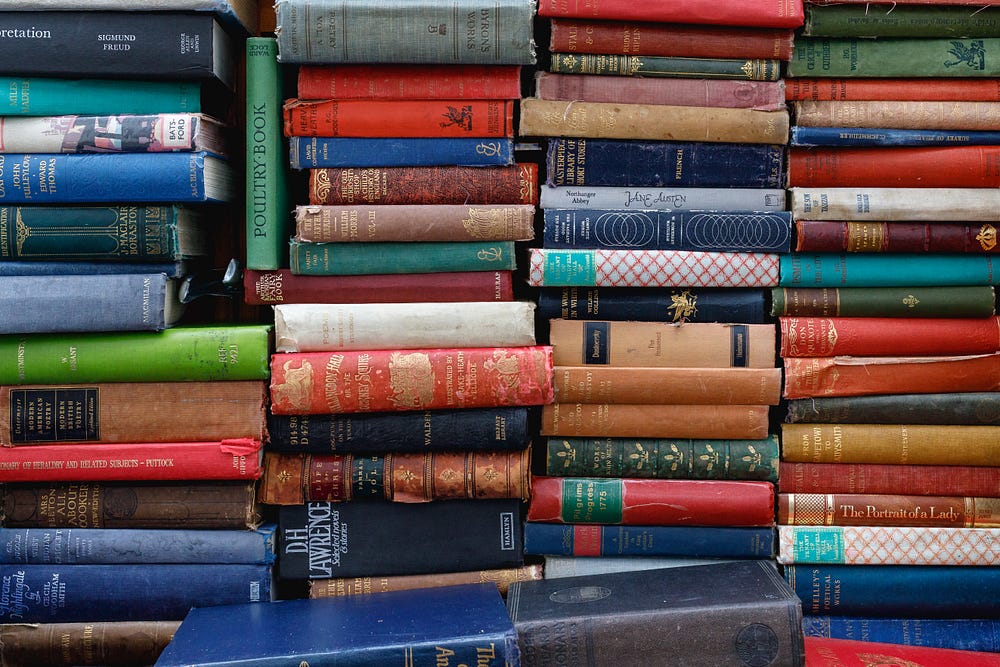
There are many ways to assess a year gone by, e.g. money, bonus, new cuountries visited, etc. One particularly useful way is to remember the books we read in the past year. To be sure, I did not complete meet my Goodreads (yup, I enjoy the app!) 2022 Reading Challenge (24 read vs a target of 30).
Credit: Ed Robertson (Unsplash)
Nonetheless, 24 is a large enough number for me to pick out my top five books of 2022 and here they are (in no particular order):
A concise, yet insightful, synopsis of Africa’s recent colonial history. The author extrapolates broad brush strokes from the many individual happenings around the continent — very useful for the reader.
A classic Urdu novel set in 1950s Pakistan. God’s Own Land is the sort of novel which deserves to be in school curriculums. It pierces the universal human condition while at the same time provides deep insights into Pakistani society (many of which remain valid seven decades later).
A wonderful novel about searching and finding. The plot unravels slowly and with elegance as the characters are fleshed out. A good read when in a pensive, soul searching frame of mind.
It’s hard to go wrong with Existentialism as a philosopy. It is, after all, a philosophy of action even though it may be cerebral in its literary form. A great ‘how to’ compendium with a dash of humor thrown in .. wordy at times but comprehensible.
Technically a war novel, but Red Metal becomes a little more given the Ukraine war playing out as I write this. The book is a fictional account of a war between Russia and NATO. Yes, it’s a novel, i.e. fiction, but there is a strong element of realism in the writings. A good, exciting novel for readers of the war genre.
What books are on your reading list for 2023? Please share your recommendations in the comments below.
Philosophy is not easy to dumb down - or at least a sophisticated and complex philosophical world view like existentialism. Nonetheless, in this brief work, Cox has done an admirable job in simplifying existentialism.
To be sure, there are paragraphs which require rereading to be understood but, by and large, Cox succeeds in explaining authenticity, bad faith, freedom and other critical aspects of existentialism succinctly.
Cox's work is a nice recap for readers familiar with the existentialism of Sartre (and others). For newbies, it's a good place to start though some knowledge of the existentialist world view will help.
It's
hard to be optimistic about Pakistan these days. The country's
multiple crises are coming together to bring about a perfect storm.
(I can't remember when the country was last in non-crisis mode?)
Credit: Unsplash - The Artist Studio
The two main political parties contending for power - Nawaz
Sharif's (now Shehbaz Sharif's?) PML-N and Imran Khan's PTI - are
playing a savage game of musical chairs in Islamabad and several
provincial capitals. There is even less focus on governance than is
usually the case.
And
governance is what is required to pull Pakistan's economy back from
the precipice. Ordinary Pakistanis are already struggling under the
weight of 30 percent plus food price inflation (officially) pushing
food insecurity to a level not seen in several decades. Moreover,
electricity brownouts and gas shortages have expanded such that
Islamabad seeks to implement policies to encourage reduced
consumption (increasing suppy to keep pace with demand is much too
difficult as it requires strategic planning). Foreign exchange is in
such short supply that each day we receive news of more factories
suspending production due to lack of imported raw materials. It's a
mess even before one mentions the 'circular debt' plaguing the energy
sector – which gets worse with each passing day.
All
this while the security situation deteriorates alarmingly (let's talk
some more with the Taliban?!). Afghanistan's Taliban government has
reinvigorated, many would also say supported, the Tehreek-e-Taliban
Pakistan (TTP) to carry out a series of high profile attacks
especially in the western border province of Khyber Pakhtoonkhwa
(KPK). These attacks have laid bare the state's claim that terrorism,
particularly the TTP, had been defeated. No, the various groups were
simply biding their time while regrouping. This time – and space -
was provided to them by the recent attempt to negotiate. Releasing
tens of militants from Pakistani jails by the authorities as a
confidence building measure preceding the talks was simply icing on
the cake.
Credit: Unsplash - Hassan Anwer
But wait, the bad news isn't finished yet. There's
another open wound which has been festering for several decades and
the infection looks to be spreading, i.e. the Baloch separatist
movement. Despite the secular, republican nature of the Baloch
insurgent movement there are whispers of collaboration between them
and the revitalized religious extremists. The enemy of my enemy is my
friend right?
Moreover, a nascent Sindhi nationalist movement
has recently turned to violence - with the support of Baloch
insurgents. Though it's a tentative, cautious shift at the moment, if
a tight Sindhi-Baloch nationalist nexus is formed in future it spell
more trouble (and violence) for Pakistan. Such violence, particularly
if it emerges in Karachi, the country's commercial hub will further
damage economic growth prospects. (Already business confidence within
the city has been affected by a post-COVID resurgence in street
crime.)
Unfortunately, most of these issues are systemic and
cannot be wished away without sustained reform. (To be sure, having
six, or was it seven, Finance Ministers in the last 4.5 years across
two governments is not conducive to reform efforts!) Nonetheless,
Pakistan has to start somewhere in order not to break more promises
to its citizens.
Stay tuned (i.e.please follow!) for future
posts in which I take a closer look at each of these subjects,
including my suggestions for tackling these issues.
NB - I
will be traveling to Pakistan in the next few weeks and will get a
better understanding of ground realities following my visit.
As
we head closer to the six month mark of the
Ukraine war, the military confrontation is locked in a virtual
stalemate. Despite Russia controlling about twenty percent of pre-war
Ukraine there is little likelihood of a military victory by either
side anytime soon.
NATO
/ US will fight until the last Ukrainian and the Russians are in no
mood to talk either. The implications of this stubborn desire to
fight are severe.
Source: Pexels
1.
Ukraine will suffer more widespread and intense destruction while
Ukrainians will continue to be displaced as internal and external
refugees (at least the Ukrainians can move freely to other
countries!).
2.
In a stalemate, NATO is tempted to escalate the war to achieve its
aim of weakening Russia, i.e. more advanced weaponry in larger
quantities will be sent to Ukraine. In turn, this will increase the
likelihood of Russians attacking NATO supply lines within Ukraine but
possibly also in Poland. Whether NATO starts protecting these vital
supply routes inside Ukraine with 'disguised' NATO personnel (say as
foreign mercenaries from the Ukrainian Foreign Legion) or
contractors is an open question? Another potential flashpoint.
3.
For its part, if Russia believes the war is shifting decisively away
it will fall back to a long standing Cold War strategic doctrine,
i.e. threaten to go nuclear. Subsequently, NATO will have to play
'nuclear' chicken over Ukraine and call Russia's bluff or threaten
escalation itself.
4.
Militarily the war can only get more dangerous. Both sides will feel
the need to escalate if the balance tips to the other party. NATO and
Russia have backed themselves into political corners domestically
with little flexibility for a face saving climb down.
5.
Oil, gas and food inflation will not subside while Western sanctions
remain in force. Poorer nations will suffer disproportionately. Sri
Lanka and Ecuador are examples of possible outcomes in many other
states. Europe will also suffer due to disruptions in its energy
supplies. Hence, European domestic discontent over the war will
increase the longer the war lasts.
6.
Post war (we'll have to think about a post-war world sometime!), the
world will be left with roaming hordes of trained and weaponized far
right extremists. These extremists, currently extolled as war heroes
fighting for freedom and democracy, will pose an immediate threat to
Europe's internal security as they transition from loose,
individually driven anti-state movements to battle hardened entities
with a chain of command (remember the origins of the Taliban?).
Source: Pexels
To
be sure, in the current situation an early end to the war is
unlikely. Thus, one wonders who benefits more from a protracted
conflict, Russia or NATO?
In Russia war fatigue, especially
as sanctions start to bite, will grow with time. Russia will also
face problems recruiting soldiers as it runs out of able bodied
people due to mounting casualties as well as war fatigue.
Similarly,
Ukrainians too will run out of people. Perhaps that may precipitate
soldiers from friendly countries like Poland, etc. be given 'leave of
absence' to join the Ukrainian Foriegn Legion (of their own volition
of course!) to supplement diminishing personnel in the Ukrainian
army.
Moreover,
as the cost of the war starts to hit US / European budgets, support
for Ukraine will cool and feed an anti-war movement, especially as
inflation hits people's wallets. This will ultimately force political
leaders to shift focus from a military to a diplomatic solution.
However, that may be many months away.
The Ukraine war has
made the world a messy and dangerous place. Many countries will pay
the price for what is essentially another European war (great power
politics of the nineteenth century come to mind). One can only hope
sanity prevails and efforts shift towards a political solution sooner
rather than later. Only after peace is restored can the world can
begin the difficult process of rebuilding.
______________________
Imran
is an adventurer, blogger, consultant, guide, photographer, speaker,
traveler and a banker in his previous life. Imran lives in Singapore. He is available on Instagram
(@imranahmedsg) and can be contacted at imran.ahmed.sg@gmail.com.




 Posts
Posts


